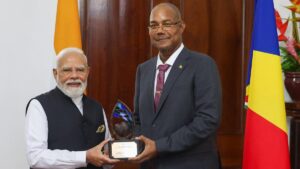
Modi Becomes India’s Longest-Serving Elected PM: 4,399 Days in Office — A Historic Milestone

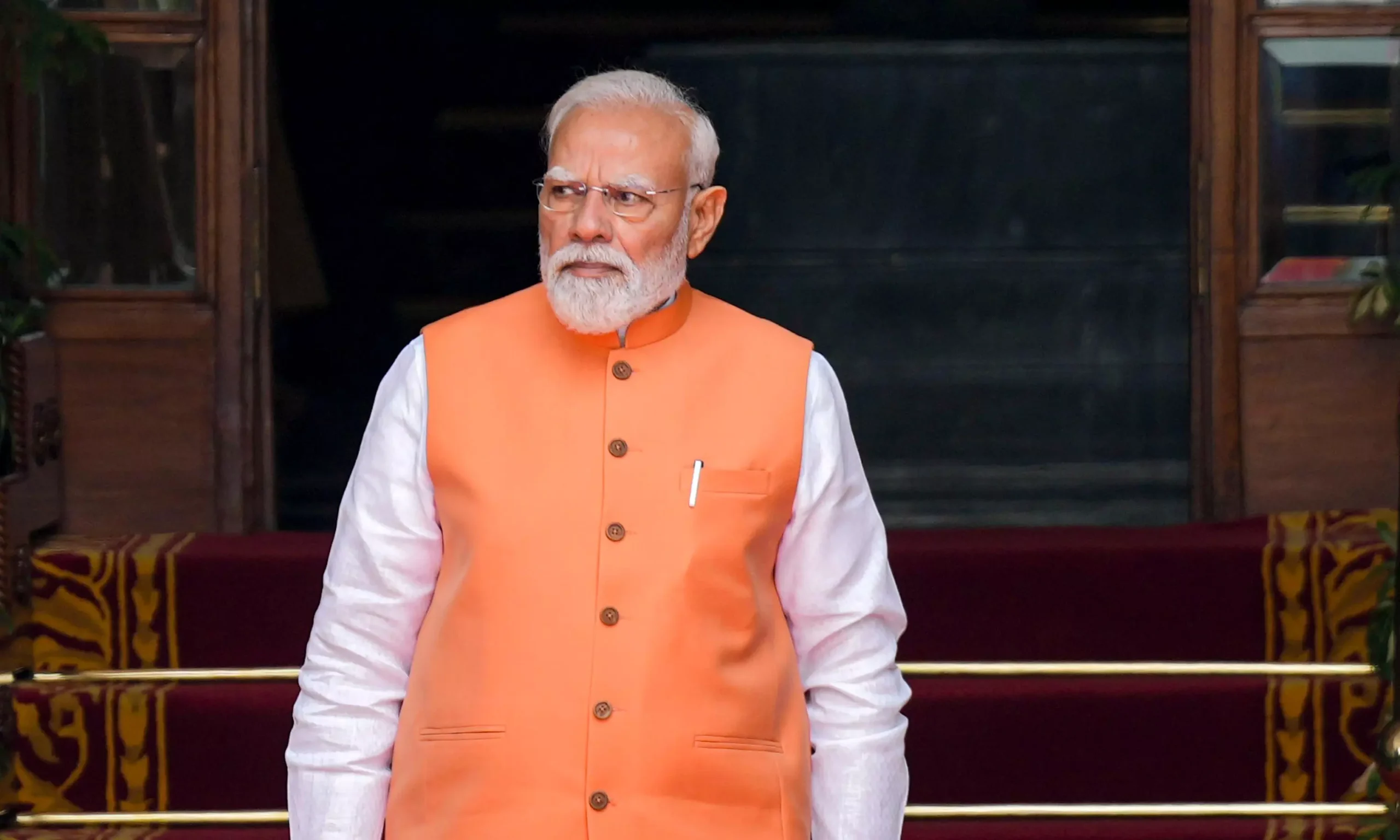
On June 10, 2026 — today — Prime Minister Narendra Modi created history by becoming India’s longest-continuously serving elected Prime Minister. By completing 4,399 consecutive days in office, Modi has surpassed the record held by India’s first Prime Minister, Jawaharlal Nehru, to achieve this historic milestone. This Modi longest serving PM India Indians are celebrating this record across the country and has earned congratulations from world leaders, industry heads, and political figures from across India.
Notably, Modi first took the oath of office on May 26, 2014, and has since won three consecutive Lok Sabha elections — in 2014, 2019, and 2024. His unbroken 12-year tenure represents a rare level of political consistency in modern Indian democracy. Furthermore, this milestone comes after he had already surpassed Indira Gandhi as the leader with the second-longest uninterrupted tenure in July 2025.
This Modi longest serving PM India achievement marks a turning point in Indian democracy.
Here is the complete story of this historic milestone — what it means, how it was achieved, and what lies ahead for India’s longest-serving elected Prime Minister.
📖 Also Read: Nepal India Border Dispute 2026 — PM Balendra Shah’s Historic Admission
Modi Longest Serving PM India — Key Facts
| Historic Date | June 10, 2026 |
| Record Days | 4,399 consecutive days as elected PM |
| Previous Record Holder | Jawaharlal Nehru — 4,398 days |
| Modi Oath Date | May 26, 2014 |
| Lok Sabha Victories | 2014, 2019, 2024 — 3 consecutive wins |
| Previous Milestone | Surpassed Indira Gandhi — July 2025 |
| Total Days in Public Office | 8,931 days (CM + PM combined) |
| Vision Going Forward | Viksit Bharat 2047 |
Modi Longest Serving PM India — What Makes This Record Special
The distinction that PM Modi has achieved today is very specific and important to understand. While Jawaharlal Nehru holds the record for the highest total number of days served as Prime Minister overall — having been PM from August 1947 until his death in May 1964 — the key difference is that Nehru’s initial years in office were before India’s first general elections were held.
India’s first general elections were conducted in 1951-52, and Nehru served as elected PM from May 13, 1952 — giving him 4,398 days as an elected head of government. Today, Modi surpasses that specific record by completing his 4,399th consecutive day as an elected Prime Minister.
Furthermore, this record is all the more remarkable because Modi has achieved it through three separate electoral victories — meaning Indian voters have consistently chosen him as their Prime Minister across more than a decade of democratic elections.
Why Is This Record Different from Nehru’s Overall Record?
Nehru was PM from 1947 but India’s first elections were in 1952. Modi’s entire 12-year tenure has been backed by direct electoral mandates — making him the longest-serving continuously elected PM in Indian history.
Modi’s Journey — From 2014 to 2026
2014 — A Historic First Mandate
Historically, when Narendra Modi took oath oath as Prime Minister on May 26, 2014, it was a watershed moment in Indian politics. The BJP won 282 seats — a clear majority in the Lok Sabha — ending 10 years of UPA rule. Furthermore, it was the first time since 1984 that a single party had won an outright majority in Parliament. Modi came to office on a wave of development promises and the slogan Acche Din.
2019 — An Even Bigger Mandate
In 2019, PM Modi defied expectations by winning an even larger mandate — with the BJP winning 303 seats. As a result, the victory was seen as a personal endorsement of Modi’s leadership style. Moreover, the 2019 campaign was dominated by national security issues following the Pulwama attack and Balakot airstrikes, which many analysts credited with swinging public sentiment strongly in the BJP’s favour.
2024 — Third Consecutive Win
The 2024 Lok Sabha elections produced a more complex result — the BJP won 240 seats, falling short of a majority on its own and requiring NDA allies to form the government. Nevertheless, The President swore in Modi as PM for a third consecutive term — an achievement matched only by Nehru in independent India’s history. Furthermore, the third term victory made Modi-led NDA the first coalition to complete a full term and return to power since Nehru’s era.
July 2025 — First Record Broken
In July 2025, Modi surpassed Indira Gandhi’s record to become the second-longest continuously serving PM in Indian history. That milestone generated significant media coverage and political debate. However, the bigger record — Nehru’s — was still ahead. Today, June 10, 2026, that record has been broken too.
World Leaders Congratulate PM Modi
The historic milestone has drawn congratulations from leaders across the globe, reflecting India’s growing international stature under Modi’s leadership.
Sri Lanka:
“This milestone is a testament not only to your years in office, but also to the trust and confidence that the people of the world’s largest democracy have repeatedly placed in your leadership.” — Sri Lankan President Anura Kumara Dissanayake
Furthermore, world leaders from multiple countries have praised Modi’s role as the voice of the Global South, his leadership in climate action through the International Solar Alliance, and his contribution to spreading digital public goods like UPI across borders. In addition, industry leaders from across India have praised his economic vision and governance model.
Key Achievements During Modi’s 12 Years
Economic Milestones:
- Significantly, India became the world’s 5th largest economy — surpassing UK and France
- UPI revolutionised digital payments — now exported to multiple countries
- GST implementation — One Nation One Tax
- Production Linked Incentive (PLI) schemes boosted manufacturing
- Record FDI inflows in multiple consecutive years
Infrastructure:
- National highway construction doubled — from 12 km/day to 28+ km/day
- UDAN scheme expanded regional air connectivity
- Bullet train project — India’s first high-speed rail underway
- Smart Cities Mission — 100 cities being transformed
- PM Awas Yojana — crores of homes built for the poor
Social Schemes:
- Swachh Bharat Mission — 100 million toilets built
- Ujjwala Yojana — free LPG connections to poor households
- PM Jan Dhan Yojana — financial inclusion for millions
- Ayushman Bharat — world’s largest health insurance scheme
- PM Kisan — direct cash transfers to farmers
Foreign Policy:
- India’s global stature elevated — G20 Presidency in 2023
- Neighbourhood First policy — stronger ties with South Asian nations
- Act East Policy — deeper engagement with ASEAN
- Quad strengthened — India-US-Japan-Australia alliance
- Voice of Global South — India speaks for developing nations
India’s PM Record — Comparison Table
| PM | Total Days | Tenure Type |
| Jawaharlal Nehru | 6,130 days total | 1947-1964 (pre + post election) |
| Indira Gandhi | 5,829 days total | Multiple non-consecutive terms |
| Narendra Modi | 4,399+ days | Consecutive elected — Record! 🏆 |
| Manmohan Singh | 3,656 days | 2 consecutive terms |
| Atal Bihari Vajpayee | 2,273 days | Multiple non-consecutive terms |
What PM Modi Said — ‘Nation First’
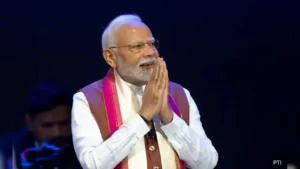
Speaking on this historic milestone, PM Modi emphasised that this achievement is not about the numbers — it is about the spirit of Nation First. Furthermore, he reaffirmed his commitment to the Viksit Bharat — Developed India — vision for 2047, which aims to make India a developed nation by the centenary of its independence.
“This milestone is not about the numbers but about the spirit of Nation First. Every day in office has been dedicated to the service of 140 crore Indians. The journey of Viksit Bharat continues.” — PM Narendra Modi
What Lies Ahead — Viksit Bharat 2047
With this historic milestone achieved, PM Modi’s focus now shifts firmly toward the Viksit Bharat 2047 vision — India’s roadmap to becoming a fully developed nation by 2047, the centenary of independence. The vision encompasses economic development, technological advancement, social equity, and India’s emergence as a global superpower.
- Make India a USD 35 trillion economy by 2047
- Achieve 100% literacy and universal education access
- World-class healthcare for every Indian citizen
- Complete digital infrastructure nationwide
- India as a global technology and innovation leader
- Sustainable development and net-zero carbon goals
📖 Also Read: Cockroach Janta Party Protest — Abhijeet Dipke Returns to Delhi
The Modi longest serving PM India record will be studied by political historians for decades.
Conclusion — Modi Longest Serving PM India
June 10, 2026 is a day that will be remembered in Indian political history. By completing 4,399 consecutive days as India’s elected Prime Minister, Narendra Modi has achieved what no other democratically elected leader has achieved in independent India’s history. Furthermore, he has done it through three consecutive electoral mandates — reflecting the consistent faith that the Indian electorate has placed in his leadership.
Moreover, this milestone comes at a time when India is firmly on its path to becoming a developed nation by 2047. The record is not just a number — it is a testament to political stability, consistent governance, and a vision for India that has resonated with millions of voters across more than a decade.
In conclusion, whatever one’s political views, this is undeniably a historic moment in India’s democratic journey. Stay tuned to Mirrorly.in for all the latest updates on Indian politics and breaking national news!