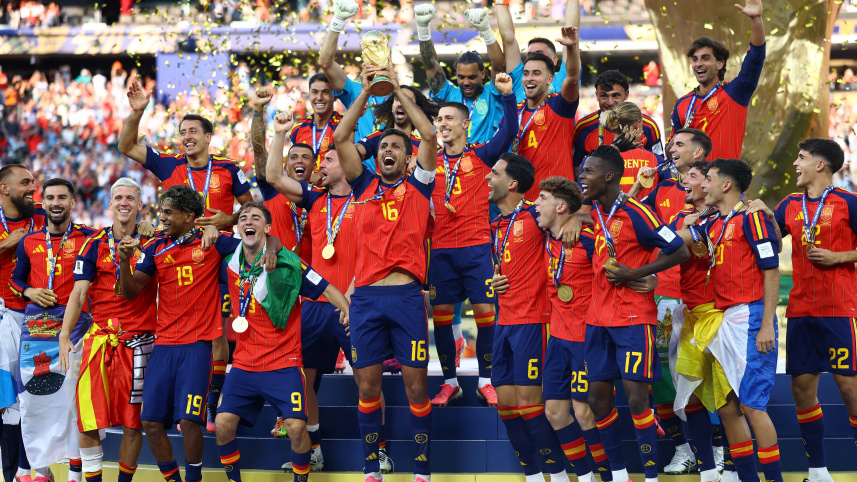
The FIFA World Cup Final has a champion, and it’s Spain. Ferran Torres struck in the 106th minute. His goal gave Spain a 1-0 extra-time win over defending champions Argentina at MetLife Stadium in East Rutherford, New Jersey. The result sealed the country’s second World Cup title, 16 years after their first triumph in 2010. For Lionel Messi, in what was widely expected to be his final World Cup appearance, the dream of back-to-back titles ended in heartbreak. Ultimately, 10-man Argentina couldn’t find a way past a dominant Spanish side.
📖 Also Read: FIFA World Cup Final Today: Spain Take On Argentina At MetLife Stadium
FIFA World Cup Final: Result at a Glance
| Match | Spain vs Argentina — FIFA World Cup Final |
| Date | Sunday, July 19, 2026 |
| Venue | MetLife Stadium (New York New Jersey Stadium) |
| Final Score | Spain 1-0 Argentina (after extra time) |
| Winning Goal | Ferran Torres, 106th minute |
| Key Moment | Enzo Fernández sent off in stoppage time (second yellow) |
| Player of the Match Storyline | Emiliano Martínez, record 10 saves in a losing effort |
| Spain’s Titles | 2 (2010, 2026) |
Note: Match details are based on live coverage from ESPN, NBC News, CBS Sports, FOX Sports, and Heavy.com.
How the FIFA World Cup Final Unfolded
From kickoff, this final followed the script that had defined both teams’ entire tournaments. Spain had conceded just one goal in seven matches heading into the final. They controlled possession from the first whistle. Meanwhile, Argentina, the tournament’s highest scorers with 19 goals on the way to the final, looked to hit on the counter. Referee Slavko Vinčić got things underway. Lamine Yamal forced an early save from Emiliano Martínez inside the first five minutes. Moments later, Lionel Messi broke into space, only for goalkeeper Unai Simón to race out and clear the danger.
Despite Spain’s clear territorial dominance, the first half ended goalless. Argentina’s defense, marshalled by Cristian Romero and Lisandro Martínez, held firm against wave after wave of Spanish pressure. Fabián Ruiz and Álex Baena tested Argentina from set-piece situations. Still, Spain couldn’t find the breakthrough their control of the game seemed to deserve. As a result, the sides went into the break locked at 0-0.
A Goalless Second Half Forces Extra Time
The pattern continued after the break. Spain kept the ball, kept probing, and kept creating half-chances. But Emiliano Martínez stood tall in the Argentina goal, making save after save to keep his side alive. Remarkably, Argentina became the first team in World Cup final history to go through an entire 90 minutes of regulation time without recording a single shot on target. That statistic alone illustrates just how thoroughly Spain dominated proceedings, even without converting that dominance into goals.
Late drama arrived in second-half stoppage time. Enzo Fernández received a second yellow card, reducing Argentina to 10 men heading into extra time. The match was still level after 90 minutes. Both sides headed into an additional 30 minutes. Argentina now faced the daunting task of holding out a man light against a Spanish side that had barely relented all match.
Ferran Torres Delivers the Decisive Moment
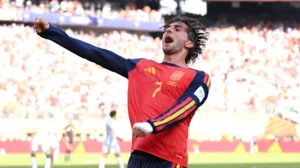
Spain came out firing in extra time. Just two minutes into the first period, Nico Williams thought he’d broken the deadlock. However, the goal was ruled out after the referee spotted a foul on Nicolás Otamendi in the build-up. The first 15-minute period of extra time ended scoreless. Spain dominated possession but still couldn’t find a way through a resilient, if outnumbered, Argentina defense.
The breakthrough finally came just 37 seconds into the second period of extra time. Nico Williams delivered a precise cross into the box. Substitute Ferran Torres met it with a first-time volley that flew past Martínez and into the net. The goal sent the Spanish end of MetLife Stadium into raptures. It was Spain’s 12th shot on target of the match, underlining just how relentless their pressure had been all game. Meanwhile, Argentina managed zero shots on target across the entire 120 minutes.
Messi’s Final World Cup Ends in Heartbreak
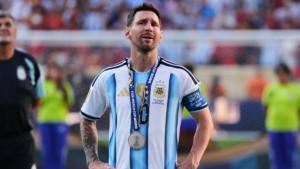
For Lionel Messi, playing what was widely expected to be his 34th and final World Cup appearance, the ending was a painful one. That mark would stand as a record for any men’s or women’s player at the tournament. Neither Messi nor Julián Álvarez managed to test Unai Simón in Spain’s goal throughout the match. Argentina’s attacking players simply found no way past a Spanish defense that recorded its seventh clean sheet of the tournament.
The final also carried deep personal significance beyond the result itself. Messi and Spain’s teenage sensation Lamine Yamal share a well-documented connection. The two were famously photographed together when Yamal was a baby, decades before they’d eventually face off on opposite sides of a World Cup final. While Messi’s side came up short, Yamal’s performance throughout the tournament, and in the final itself, reinforced his status as one of the sport’s brightest emerging stars.
Emiliano Martínez’s Heroic, Losing Effort
If there’s one individual performance that will be remembered from this final regardless of the result, it’s Emiliano Martínez’s goalkeeping display. The Argentina goalkeeper made 10 saves over the course of the match. That effort set a new record for saves by a goalkeeper in a men’s FIFA World Cup final. His heroics kept Argentina in the game long after most sides would have folded under similarly relentless pressure.
Were it not for his efforts, Spain’s eventual margin of victory could have been considerably larger. Spain finished with an overall expected goals total of 1.94 from 20 shots. Argentina, by comparison, managed just 0.2 expected goals from two attempts across the entire match.
Full Match Statistics
| Statistic | Spain | Argentina |
| Final Score | 1 | 0 |
| Shots on Target | 12 | 0 |
| Total Shots | 20 | 2 |
| Expected Goals (xG) | 1.94 | 0.2 |
| Goalkeeper Saves | — | 10 (record) |
| Red Cards | 0 | 1 (Enzo Fernández) |
What This Win Means for Spain
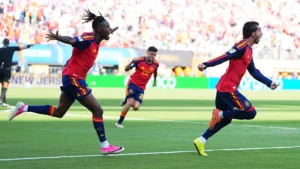
Spain’s triumph completes a remarkable run. It began, somewhat improbably, with a draw against tournament debutants Cape Verde in the group stage. From that unremarkable start, Luis de la Fuente’s side grew into the tournament’s most dominant team. Along the way, they extended their unbeaten run to 37 matches. They conceded just a single goal across seven games before the final. This second World Cup title also arrives on the back of Spain’s European Championship success. Together, they give this golden generation of Spanish players both major international trophies within a remarkably short span.
This side blends experienced figures like Rodri with dazzling young talents like Lamine Yamal and Pau Cubarsi. Consequently, this win firmly establishes Spain as the standard-bearer of international football heading into the next World Cup cycle. It also completes a full-circle moment 16 years in the making, connecting this new generation directly to the golden generation that first delivered Spain’s maiden World Cup title back in 2010.
What This Loss Means for Argentina and Messi
For Argentina, the dream of becoming the first nation since Brazil in 1962 to successfully defend the World Cup title ended in painful fashion. Argentina entered the final as the tournament’s highest scorers. Even so, they simply couldn’t replicate that attacking threat against a Spanish side that suffocated their supply lines all match. The sending-off of Enzo Fernández in the closing stages of regulation only compounded their difficulties heading into extra time.
For Messi personally, this defeat closes out what may be his final World Cup appearance without the fairytale ending many had hoped for. Even so, Messi himself would likely concede that Spain were the worthier side on the day. They dominated every attacking metric across the full 120 minutes. His legacy as one of the sport’s greatest-ever players remains untouched by this result. However, the specific ambition of lifting back-to-back World Cups, a feat no nation has managed since Brazil decades ago, will now go unfulfilled.
Key Talking Points
1. A Historic Shot-Stopping Performance From Martínez
Emiliano Martínez’s 10-save performance, a new World Cup final record, ensures his individual display will be remembered as one of the finest goalkeeping performances in the tournament’s history, even in a losing cause.
2. Spain’s Dominance Was Total, Even Without an Early Goal
Argentina’s failure to register a single shot on target across 90 minutes of regulation time captures just how one-sided this final was, despite the scoreline remaining close until deep into extra time.
3. A Fitting, If Bittersweet, Note for Messi’s World Cup Career
Messi’s final World Cup ending in defeat adds a bittersweet note to an otherwise legendary international career. Even so, his earlier triumph in Qatar in 2022 ensures his World Cup legacy remains secure regardless of today’s result.
FIFA World Cup Final: Frequently Asked Questions (FAQs)
Who won the FIFA World Cup Final today?
Spain beat Argentina 1-0 in extra time to win their second World Cup title, with Ferran Torres scoring the decisive goal in the 106th minute.
Who scored the winning goal in the World Cup Final?
Ferran Torres scored the winner, finishing a cross from Nico Williams just 37 seconds into the second period of extra time.
Was this Lionel Messi’s last World Cup?
It was widely expected to be Messi’s final World Cup appearance. Argentina’s defeat means his second World Cup title attempt, after winning in Qatar in 2022, ended in disappointment.
How many saves did Emiliano Martínez make in the final?
Martínez made 10 saves, a new record for the most saves by a goalkeeper in a men’s FIFA World Cup final.
Why did Argentina play with 10 men?
Enzo Fernández received a second yellow card in second-half stoppage time, reducing Argentina to 10 players heading into extra time.
Is this Spain’s second World Cup title?
Yes. Spain previously won the World Cup in 2010, meaning this 2026 triumph marks their second title, 16 years apart.
Conclusion — A Deserved Triumph for La Roja
This FIFA World Cup Final delivered exactly the drama the occasion demanded. It was a tense, tightly fought contest settled only deep into extra time. A red card, a disallowed goal, and a record-breaking goalkeeping display punctuated the action. In the end, Spain’s relentless attacking pressure finally told. Ferran Torres’s extra-time strike sealed a deserved, if hard-fought, second World Cup title. For Argentina and Lionel Messi, it’s a heartbreaking way to close out a golden era. Still, nothing can diminish what this Spanish side has now achieved on the game’s biggest stage.
Stay tuned to Mirrorly.in for full reaction and analysis from the FIFA World Cup Final.
📖 Also Read: FIFA World Cup Final Today: Spain Take On Argentina At MetLife Stadium