Russia and Taliban Sign Historic Military Deal 2026: What It Means for India and the World

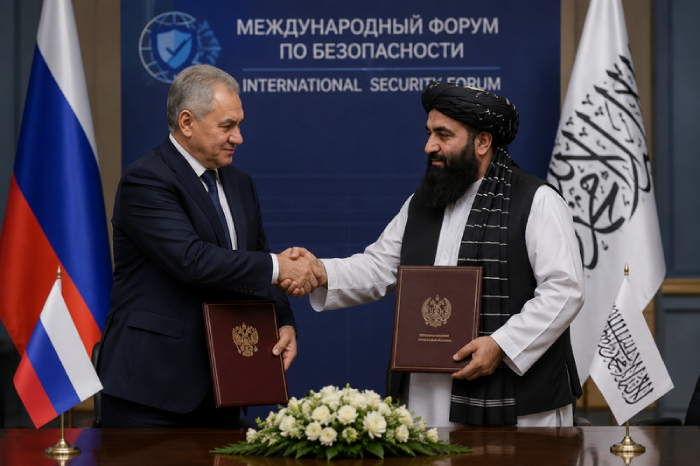
In a development that has sent shockwaves across international diplomatic circles, Russia and the Taliban government of Afghanistan have signed a historic military cooperation agreement — the Russia Taliban military deal 2026 — that could reshape the geopolitics of Central Asia and beyond.
The deal was signed on May 27, 2026, on the sidelines of an international security forum held in the Moscow region. The signing parties were Sergei Shoigu, Secretary of Russia’s Security Council, and Mohammad Yaqub, Afghanistan’s Taliban Defence Minister and son of Taliban founder Mullah Mohammad Omar.
This Russia Taliban military deal 2026 marks a dramatic shift in global alliances — and has significant implications for India, the United States, Central Asia, and the entire international community. Here is everything you need to know about this historic and controversial agreement.
Key Facts — Russia Taliban Military Deal 2026
| Deal Signed On | May 27, 2026 |
| Venue | International Security Forum, Moscow Region |
| Russia Signatory | Sergei Shoigu — Security Council Secretary |
| Taliban Signatory | Mohammad Yaqub — Taliban Defence Minister |
| Type of Deal | Military & Technical Cooperation Agreement |
| Expected Equipment | MANPADs, Aerial Defense Systems, Military Tech |
| Russia Recognized Taliban | July 2025 — First country to formally recognize |
| Deal Text Public? | No — Terms not yet disclosed publicly |
Russia Taliban Deal 2026: What Was Signed?
The Russia Taliban military deal 2026 is a military and technical cooperation agreement between the Russian Federation and Afghanistan’s Taliban government. According to reports, the deal covers several key areas of military cooperation.
While the exact text of the agreement has not been made public — neither Moscow nor Kabul has released the full details — analysts and defence experts have identified the likely scope of the deal based on standard military cooperation frameworks.
What the Deal Likely Includes:
- Supply of MANPADs (Man-Portable Air-Defense Systems) to Taliban forces
- Aerial defense systems and related military technology
- Technical training for Taliban security forces
- Maintenance support for military equipment
- Exchange of weapons manufacturing licenses
- Joint military research and development projects
- Operational integration support for Taliban security forces
Russia’s defence export capacity is currently under pressure due to its ongoing military operations in Ukraine and Western sanctions. Analysts therefore expect the early phases of the deal to focus more on training, maintenance, and technology transfer rather than large-scale weapons supply.
Russia Taliban Military Deal 2026: The Background
To understand why this deal is so significant, we need to understand the history of Russia-Taliban relations — a relationship that has evolved dramatically over the past five years.
Russia Was Once Against the Taliban
For most of its modern history, Russia viewed the Taliban as a terrorist organization and had it formally banned under Russian law. Moscow was deeply concerned about Taliban ideology spreading into Central Asian countries that border Russia — countries like Tajikistan, Uzbekistan, and Turkmenistan.
The US Withdrawal Changed Everything
When American forces withdrew from Afghanistan in August 2021, the Taliban rapidly took control of the country. This created a new geopolitical reality — the Taliban was now the de facto government of Afghanistan, whether the world liked it or not.
Russia quickly recalculated its strategy. Instead of continuing to oppose the Taliban from a distance, Moscow decided to engage with it directly — arguing that it was better to have dialogue than to isolate Afghanistan and risk instability on Central Asia’s doorstep.
Russia Officially Recognized Taliban in 2025
In July 2025, Russia made history by becoming the first country to formally recognize the Taliban as the legitimate government of Afghanistan. Moscow removed the Taliban from its list of banned terrorist organizations and accepted the Taliban’s ambassador to Russia. This was a dramatic diplomatic shift that signalled Russia’s intention to build a serious relationship with Kabul.
The May 2026 Military Deal
The signing of the Russia Taliban military deal 2026 on May 27 is the logical next step in this evolving relationship. Having established diplomatic ties, Russia is now formalizing military cooperation — turning a political relationship into a strategic partnership.
Who Are the Key Figures?
Sergei Shoigu — Russia’s Security Council Secretary
Sergei Shoigu is one of Russia’s most powerful officials and a close confidant of President Vladimir Putin. He previously served as Russia’s Defence Minister for over a decade before being appointed Security Council Secretary. His presence at the signing ceremony signals that Russia treats this deal as a top-level strategic priority — not a minor diplomatic formality.
Mohammad Yaqub — Taliban Defence Minister
Mohammad Yaqub is arguably the most powerful military figure in Taliban-controlled Afghanistan. He is the son of Mullah Mohammad Omar — the founder of the Taliban movement — which gives him enormous symbolic authority within the organisation. As Defence Minister, he oversees all Taliban military forces. His willingness to travel to Moscow and sign this deal signals that the Taliban leadership fully endorses the Russia partnership at the highest level.
What Does This Mean for India?
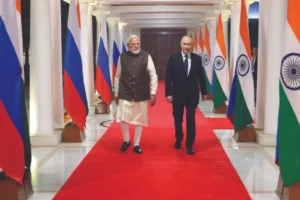
Prime_Minister_of_Bharat_Shri_Narendra_Damodardas_Modi_and_the_President_of_The_Russian_Federation_Mr._Vladimir_Putin
For India, the Russia Taliban military deal 2026 is a development that demands close attention — for several important reasons.
Security Concerns on the Western Border
India has long been concerned about the Taliban’s relationship with Pakistan and with various militant groups that operate in the Afghanistan-Pakistan region. A Taliban that is now receiving Russian military technology and weapons becomes a more capable military force — and that has direct implications for regional security dynamics that affect India.
Impact on India-Russia Relations
India has historically maintained strong ties with Russia — buying Russian military equipment, maintaining diplomatic dialogue, and avoiding open confrontation with Moscow even during the Ukraine crisis. The Russia-Taliban deal creates a complex situation for New Delhi — India cannot openly criticise its Russian partner, but it also cannot ignore the security implications of a better-armed Taliban on its doorstep.
Afghanistan as a Gateway
India had invested billions of dollars in Afghanistan’s infrastructure and development during the previous Afghan government’s era. The Taliban takeover ended much of that engagement. A Russia-Taliban military alliance further complicates India’s ability to re-engage with Afghanistan — and could give Pakistan and its allies greater strategic depth in the region.
International Reactions
United States — Deep Concern
Washington has viewed the Russia-Taliban rapprochement with deep concern. The United States spent 20 years and trillions of dollars fighting the Taliban in Afghanistan — the idea of Russia now arming the same group is seen as a provocative and destabilising move by Moscow.
Central Asian Countries — Cautious
Countries like Tajikistan, Uzbekistan, and Turkmenistan — which share borders with Afghanistan — are watching the situation carefully. They are concerned that a better-armed Taliban could increase instability along their borders, even as Russia claims the deal will actually improve regional security.
China — Watching Closely
China, which has also been engaging with the Taliban through its Belt and Road Initiative, is watching Russia’s military deal closely. Beijing has its own security concerns about Afghanistan — particularly regarding Uyghur militants who have historically found refuge in the country.
Russia’s Strategic Goals
Why is Russia doing this? Experts identify several key strategic motivations behind the Russia Taliban military deal 2026.
- Expand influence in Central Asia to counter US and NATO presence in the region
- Create a new revenue stream for Russian defence exports at a time when Western sanctions are biting
- Use Afghanistan as a buffer zone against ISIS and other militant groups that threaten Russian interests
- Send a geopolitical signal to the West — Russia has allies and options beyond Europe
- Formalize a relationship that gives Moscow leverage over Afghanistan’s future
Some analysts have described the deal as more symbolic than substantive at this stage — arguing that Russia’s current military capacity is stretched by the Ukraine war and that large-scale weapons transfers to the Taliban are unlikely in the near term. However, even a symbolic deal has significant geopolitical implications.
What Happens Next?
The Russia Taliban military deal 2026 is just the beginning of what promises to be a rapidly evolving relationship. Several key developments are expected in the coming months.
- Delivery of initial military equipment — likely aerial defense systems and MANPADs
- Technical training missions — Russian military advisors may be deployed to Afghanistan
- Further diplomatic recognition — more countries may follow Russia’s lead in recognizing the Taliban
- India-Russia diplomatic conversations — New Delhi will likely raise concerns with Moscow
- US response — Washington may respond with new sanctions or diplomatic pressure
Conclusion
The Russia Taliban military deal 2026 is one of the most significant geopolitical developments of the year. It marks a fundamental shift in the global balance of power in Central Asia — bringing Russia and the Taliban into a formal military partnership that would have been unthinkable just five years ago.
For India, for Central Asia, for the United States, and for the entire world — this deal demands attention. The implications of a better-armed, Russia-backed Taliban government in Afghanistan will be felt across the region for years to come.
Whether this deal leads to greater stability or greater conflict in Afghanistan and Central Asia remains to be seen. But one thing is certain: the world order in this critical region is changing — and changing fast.
Stay tuned to Mirrorly.in for all the latest updates on the Russia Taliban military deal and international affairs.