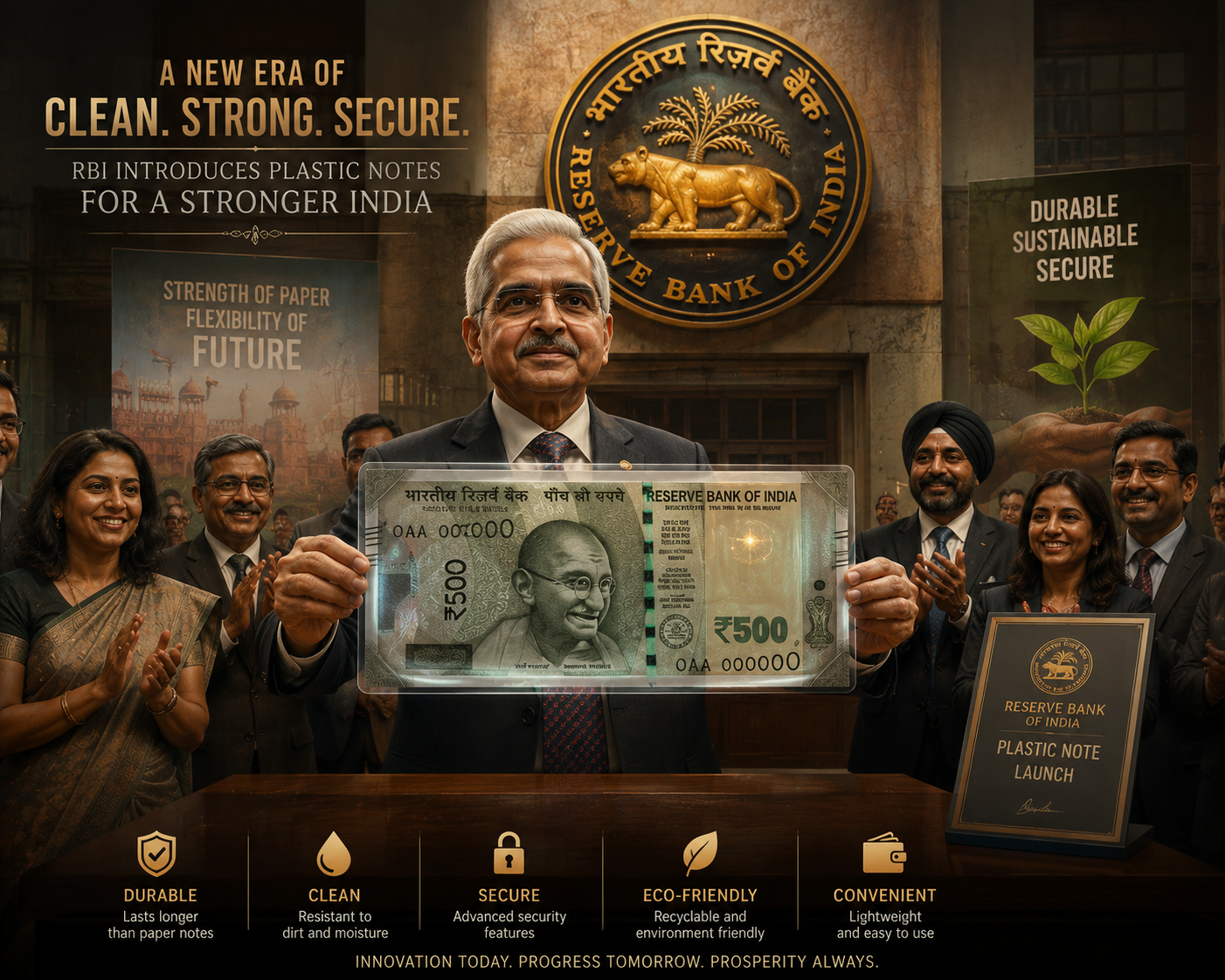
RBI plastic currency notes are finally becoming a reality in India as the Reserve Bank revives its decade-old polymer plan.
India is on the verge of a major change in the way its currency looks and feels. The Reserve Bank of India (RBI) has revived a decade-old plan to introduce plastic polymer banknotes into circulation — and this time, it looks like the plan is serious. With currency printing costs shooting up and billions of damaged notes being destroyed every year, RBI is exploring polymer notes as a smart, long-term solution.
If you have ever wondered why your currency notes tear so easily, fade in your wallet, or get damaged in the rain — polymer notes are the answer India has been waiting for. In this article, we explain everything you need to know about RBI plastic currency notes, why they are coming, how they work, and what this means for you.
What Are RBI Plastic Currency Notes?
Polymer notes are banknotes made from a thin, flexible, plastic-based material — not rigid like a credit card, but soft and foldable just like traditional paper notes. They look and feel very similar to regular notes, but they are significantly more durable, water resistant, and harder to counterfeit.
Polymer banknotes are already widely used across the world. Countries like Australia, Canada, the United Kingdom, New Zealand, and Vietnam have been using polymer notes for years — and the results have been overwhelmingly positive. These notes last two to three times longer than paper notes, which means the government spends far less on printing replacements.
India’s RBI had actually tested polymer notes back in 2012 — a pilot project for Rs 10 notes in select cities. However, the project was shelved due to technical challenges and limited ATM compatibility at the time. Now, more than a decade later, RBI has revived the plan with better technology and a clearer vision.
Why Is RBI Introducing Plastic Currency Notes Now?
The timing of this decision is not a coincidence. Several key factors have pushed RBI to seriously consider polymer notes in 2026:
- Currency Printing Costs Have Skyrocketed
The cost of printing paper currency in India has jumped significantly. According to RBI’s annual report for FY25, the expenditure on printing paper currency notes rose to Rs 6,372.8 crore — up from Rs 5,101.4 crore the previous year. That is a jump of nearly 25% in just one year. Polymer notes, despite being more expensive to produce initially, last much longer — making them cheaper in the long run.
- Billions of Notes Are Being Destroyed Every Year
In FY25 alone, 23.8 billion pieces of soiled banknotes were disposed of by RBI. These are notes that got torn, wet, dirty, or simply too worn out to use. This is an enormous waste of resources — both financial and environmental. Polymer notes are far more resistant to moisture, dirt, and tearing, which means far fewer notes need to be destroyed each year.
- Cash Demand Is Still Very High
Despite the rapid growth of UPI and digital payments, India’s demand for physical cash continues to grow. Currency in circulation reached a record Rs 42.86 lakh crore as of May 15, 2026 — an increase of approximately 11.5 percent compared to the previous year. More cash in circulation means more notes to print, more notes to maintain, and more notes to replace. Polymer notes help manage this growing demand more efficiently.
- ATMs Are Now Ready
One of the main reasons the 2012 polymer pilot failed was that ATMs at the time were not equipped to handle plastic notes. That problem has now been solved. Modern ATMs in India are fully capable of dispensing polymer-based notes — removing one of the biggest technical barriers to adoption.
Key Facts — RBI Plastic Currency Notes 2026
| Currency Printing Cost FY25 | Rs 6,372.8 crore |
| Notes Destroyed in FY25 | 23.8 billion pieces |
| Currency in Circulation | Rs 42.86 lakh crore (May 2026) |
| Pilot Start Denomination | Rs 10 and Rs 20 (expected) |
| Previous Pilot Year | 2012 — Rs 10 notes (shelved) |
| Countries Using Polymer Notes | 45+ countries worldwide |
| Polymer Note Lifespan | 2-3x longer than paper notes |
Benefits of RBI Plastic Currency Notes
Longer Lasting
Polymer notes last two to three times longer than traditional paper notes. A paper note typically lasts 1-2 years in circulation before it needs to be replaced. A polymer note can last 5 years or more — dramatically reducing the frequency and cost of replacement.
Water and Dirt Resistant
Have you ever accidentally put a note through the washing machine? Paper notes do not survive. Polymer notes do. They are resistant to moisture, sweat, dirt, and most common liquids. This makes them particularly well-suited for India’s hot, humid climate and monsoon season.
Harder to Counterfeit
Polymer notes come with advanced security features that are extremely difficult to replicate — including transparent windows, holographic elements, and special printing techniques. This makes counterfeiting significantly harder compared to paper notes.
Environment Friendly
Because polymer notes last longer, fewer notes need to be produced over time — which means less paper consumption, less ink, and less chemical waste from the printing process. Additionally, old polymer notes can be recycled into plastic products.
ATM Compatible
Modern ATMs are already capable of dispensing polymer notes. This means there will be no major infrastructure changes required at banks or ATMs — making the transition smoother and faster.
What Denominations Will Get Polymer Notes First?
According to reports, RBI is expected to begin the polymer pilot with low-denomination notes — specifically Rs 10 and Rs 20. This makes practical sense for several reasons: low-denomination notes change hands most frequently, get dirty fastest, and are most commonly damaged.
A pan-India rollout of polymer notes for all denominations is not expected in the near term. The RBI will first assess the results of the pilot project — looking at public acceptance, ATM performance, and cost efficiency — before deciding on a broader rollout.
Will Your Old Paper Notes Become Invalid?
Absolutely not! There is no need to panic. The introduction of polymer notes does NOT mean your existing paper notes will become invalid. Paper notes will continue to be legal tender and will remain in circulation alongside polymer notes.
India will likely maintain a combination of paper and polymer notes — just like many other countries do. The transition will be gradual, starting with a small pilot, and then expanding based on the success of that trial. Your existing notes — whether Rs 10, 100, 200, 500 — will all remain valid.
Which Countries Already Use Polymer Notes?
India will be joining a long list of countries that have successfully made the switch to polymer banknotes:
- Australia — First country to adopt polymer notes nationally in 1988
- Canada — Switched to polymer notes in 2011-2013
- United Kingdom — Switched to polymer in 2016 (5 pound note)
- New Zealand — Full polymer rollout completed
- Vietnam — Uses polymer notes for all major denominations
- 45+ other countries — Including Singapore, Mexico, and many more
Australia’s experience is particularly encouraging — they report that polymer notes have saved hundreds of millions of dollars in printing and replacement costs, while virtually eliminating counterfeiting of low-denomination notes.
What This Means for the Common Man

For the average Indian citizen, the introduction of polymer notes will be a positive change in everyday life:
- Notes will no longer tear easily in your wallet or pocket
- Notes will survive rain, sweat, and accidental wetting
- Fake notes will be significantly harder to produce
- ATMs will continue to work normally with new notes
- Old paper notes will remain valid — no need to exchange
The only adjustment people may need to make is getting used to the slightly different feel of polymer notes — they are a little smoother and more plastic-like to the touch. But after a few weeks, most people report that the difference becomes unnoticeable.
When Will RBI Polymer Notes Be Available?
According to multiple reports, RBI is expected to announce the pilot project for polymer notes very soon. The pilot is likely to begin with Rs 10 and Rs 20 notes in select cities or regions. Based on the results of the pilot, RBI will then decide on a wider national rollout.
There is no official date confirmed yet, but given the urgency of the cost problem and the fact that the proposal has already been discussed in multiple RBI board meetings in Patna and Mumbai, the announcement could come within the next few months.
Stay tuned to Mirrorly.in for the latest updates on RBI polymer notes — we will cover the official announcement as soon as it happens!
Conclusion
India’s currency is about to get a major upgrade. RBI’s plan to introduce polymer plastic banknotes is a well-thought-out, practical solution to a very real problem — rising printing costs, billions of damaged notes, and a growing cash economy that demands better, more durable currency.
RBI plastic currency notes will transform how India manages its cash economy.
For citizens, the change will be largely positive — notes that last longer, resist water and dirt, and are harder to counterfeit. For the government and RBI, it means significant long-term savings and a more efficient currency management system.
The most important thing to remember is that your existing notes will remain valid. This is not demonetisation — it is an upgrade. And if the experience of 45+ countries around the world is any guide, India’s polymer note experiment is likely to be a great success.