India’s Nuclear Arsenal Swells To 190 Warheads — Which Country Has The Most Nukes In 2026?

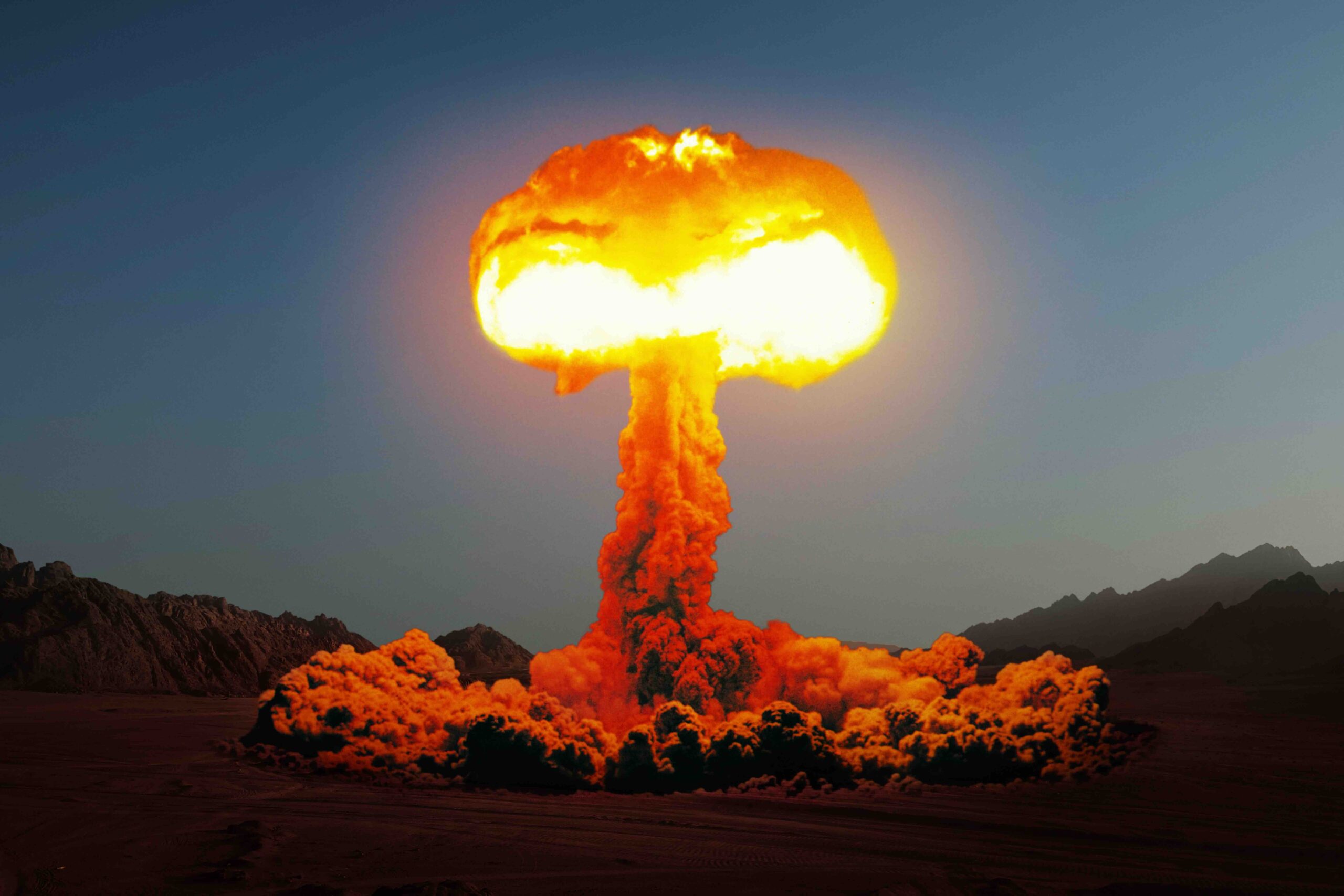
India nuclear arsenal 2026 has grown to approximately 190 warheads — marking a significant increase in the country’s strategic nuclear capability, according to the SIPRI Yearbook 2026 released on June 8. Notably, this India nuclear arsenal 190 warheads figure represents a rise from 180 warheads in 2025, further widening India’s lead over Pakistan in terms of nuclear stockpile size. Furthermore, for the first time ever, SIPRI has assessed that 12 of India’s warheads may now be operationally deployed.
Moreover, the SIPRI report comes in the aftermath of Operation Sindoor — the major India-Pakistan military confrontation of May 2025 — which SIPRI described as an unusually severe military crisis between two nuclear-armed neighbours. In addition, the report reveals that globally, all nine nuclear-armed states continued to modernise and expand their arsenals through 2025, even as the total number of warheads worldwide declined slightly due to the US and Russia dismantling older retired weapons.
So, consequently, which country has the most nuclear weapons in 2026? And where does India stand in this global nuclear order? Here is a complete breakdown of the India nuclear arsenal 190 warheads report — and a country-by-country comparison of nuclear power.
🔗 Source: SIPRI Yearbook 2026 — Official Press Release
India Nuclear Arsenal 190 Warheads — Key Facts at a Glance
| Report Source | SIPRI Yearbook 2026 (Released June 8, 2026) |
| India Warheads (2026) | ~190 warheads |
| India Warheads (2025) | ~180 warheads |
| Deployed Warheads | 12 (first time SIPRI reports deployed warheads for India) |
| Pakistan Warheads (2026) | ~170 warheads |
| India’s Delivery Systems | Nuclear Triad — Land, Air, Sea (SSBNs) |
| India’s Nuclear Doctrine | No First Use (NFU) + Credible Minimum Deterrence |
| India’s Nuclear Tests | 1974 (Smiling Buddha), 1998 (Shakti) |
This India nuclear arsenal 2026 data is sourced directly from the SIPRI Yearbook 2026, released on June 8.
Which Country Has The Most Nuclear Warheads In 2026?
According to the SIPRI Yearbook 2026, a total of 12,187 nuclear warheads exist globally as of January 2026. Furthermore, of these, approximately 9,745 are in active military stockpiles and considered potentially operationally available. Additionally, around 4,012 warheads are deployed with missiles and aircraft — with 2,100 to 2,200 of those kept in a state of high operational alert, meaning they can be launched within minutes.
Therefore, here is the complete country-by-country nuclear warhead comparison based on the latest SIPRI 2026 data:
| Rank | Country | Total Warheads (2026) | Deployed |
| 1 | Russia | ~5,580 | 1,796 |
| 2 | United States | ~5,044 | 1,770 |
| 3 | China | ~620 | 34 |
| 4 | France | ~290 | 280 |
| 5 | United Kingdom | ~225 | 120 |
| 6 | Pakistan | ~170 | — |
| 7 | India | ~190 | 12 🇮🇳 |
| 8 | Israel | ~90 | — |
| 9 | North Korea | ~50 | — |
🔗 Data Source: SIPRI Yearbook 2026 — World Nuclear Forces Chapter
India Nuclear Arsenal — Why 190 Warheads Is a Significant Milestone
- India Now Leads Pakistan For The First Time Since The 1990s
Historically, India and Pakistan were considered roughly equal in nuclear capability. However, in 2024, India overtook Pakistan in warhead count for the first time in decades. Consequently, as of January 2026, India has approximately 190 warheads compared to Pakistan’s 170 — a gap of 20 warheads that continues to widen. Furthermore, while Pakistan is still developing new delivery systems and accumulating fissile material, India is progressing faster in terms of both quantity and technological sophistication.
- India’s Nuclear Triad Is Now Fully Operational
Significantly, India is one of very few countries in the world to possess a complete nuclear triad — the ability to deliver nuclear weapons from land, air, and sea. As a result, India’s second-strike capability is considerably stronger, meaning that even after absorbing a nuclear first strike, India retains the ability to retaliate. Additionally, the deployment of canisterised missiles and sea-based deterrence patrols on Arihant-class submarines suggests India is moving towards a more ready nuclear posture.
- First-Ever Operational Deployment Reported
Notably, the SIPRI Yearbook 2026 marks the first time the institute has assessed that India has operationally deployed nuclear warheads — specifically 12 warheads. Moreover, this is a significant shift from India’s traditional peacetime posture of storing warheads separately from delivery systems. Therefore, analysts interpret this as a sign that India is quietly modernising its nuclear readiness in response to both Pakistan and China.
🔗 Read More: The Week — India Deploys Nuclear Warheads For First Time: SIPRI
India Nuclear Arsenal 190 Warheads — Context After Operation Sindoor
The India nuclear arsenal 2026 report provides important context in light of Operation Sindoo in light of Operation Sindoor. Specifically, the report describes the May 2025 India-Pakistan military confrontation as an unusually severe military crisis — one that saw India strike Pakistani air and missile bases that were likely to have nuclear-related roles.
Nevertheless, SIPRI notes that both countries took deliberate steps to avoid further escalation, reflecting the reality that both sides understood the nuclear stakes involved. Furthermore, the report highlights that this crisis unfolded between two nuclear-armed states, making it one of the most dangerous standoffs since the Cold War. Consequently, India’s nuclear posture and readiness have come under fresh global scrutiny.
Key Points About India’s Nuclear Doctrine:
- No First Use (NFU) policy — India will not use nuclear weapons first
- Credible Minimum Deterrence — India maintains only as many warheads as needed to deter adversaries
- Massive retaliation doctrine — any nuclear attack on India will be met with overwhelming nuclear response
- Nuclear Command Authority (NCA) — headed by the Prime Minister, controls all nuclear assets
- Civilian oversight — India’s nuclear weapons are under strict civilian political control
Russia and USA — Still The Dominant Nuclear Powers
While India’s nuclear arsenal growth is notable, it is important to understand that Russia and the United States together account for nearly 86 percent of all nuclear weapons on the planet. Specifically, Russia holds approximately 5,580 warheads while the US has around 5,044 — numbers that dwarf all other nuclear states combined. Additionally, both countries are implementing extensive modernisation programmes that could further increase their deployed warhead counts in the coming years.
Furthermore, with the expiry of the New START Treaty in February 2026, there is now no binding bilateral agreement limiting US and Russian nuclear arsenals. Therefore, analysts warn that this creates significant uncertainty about the future direction of the world’s two largest nuclear forces.
China’s Rapid Nuclear Expansion:
Meanwhile, China’s nuclear arsenal is expanding faster than any other country’s. Notably, SIPRI estimates China now has approximately 620 warheads — up from 600 in 2025. Moreover, China showcased several new nuclear systems during its 2025 military parade and has been loading hundreds of missiles into new silo fields across the country. Consequently, India’s long-range nuclear modernisation — specifically developing weapons capable of reaching targets across China — is directly linked to this rapid Chinese buildup.
🔗 Read More: Al Jazeera — Nuclear Risks Rise As Powers Expand Arsenals: SIPRI 2026
India’s Nuclear Delivery Systems — A Complete Breakdown
Land-Based Missiles (Agni Series):
- Agni-I — Range: 700-900 km — Short range, Pakistan-focused
- Agni-II — Range: 2,000-3,500 km — Medium range
- Agni-III — Range: 3,500-5,000 km — Covers most of China
- Agni-IV — Range: 3,500-4,000 km — Solid-fuel, quick launch
- Agni-V — Range: 7,000-8,000 km — ICBM-class, covers all of China
- Agni-P (Prime) — New canisterised missile, rapid deployment capability
Air-Based Delivery:
- Dassault Mirage 2000 — Nuclear-capable fighter aircraft
- SEPECAT Jaguar — Secondary nuclear delivery aircraft
Sea-Based Delivery (SSBNs):
- INS Arihant — India’s first nuclear-powered ballistic missile submarine (SSBN)
- INS Arighaat — Second Arihant-class SSBN, commissioned 2024
- K-15 Sagarika — Submarine-Launched Ballistic Missile (SLBM), range ~750 km
- K-4 SLBM — Range ~3,500 km, under deployment — covers entire Pakistan and most of China
🔗 Reference: Wikipedia — India and Weapons of Mass Destruction
Conclusion — India Nuclear Arsenal 190 Warheads And What It Means
In conclusion, the SIPRI Yearbook 2026 confirms that India’s nuclear arsenal has grown to 190 warheads — a milestone that reflects India’s growing strategic ambitions and its determination to maintain a credible deterrent against both Pakistan and China. Furthermore, the first-ever operational deployment of 12 warheads signals a quiet but significant shift in India’s nuclear posture.
Moreover, India’s complete nuclear triad — covering land, air, and sea — places it in the same strategic league as the world’s most advanced nuclear powers. Additionally, the widening gap over Pakistan in warhead count strengthens India’s deterrence position in South Asia. Nevertheless, India continues to adhere to its stated No First Use policy and the principle of credible minimum deterrence.
Therefore, as global nuclear competition intensifies — with China expanding rapidly and the US-Russia arms control framework collapsing — India’s India nuclear arsenal 2026 milestone of 190 warheads is not just a number. In addition, it is a statement of strategic intent. Stay tuned to Mirrorly.in for the latest updates on India’s defence and national security!
📖 Also Read: Modi Becomes India’s Longest-Serving Elected PM: 4,399 Days in Office — A Historic Milestone