India FATF Vice President 2026: Vivek Aggarwal Elected — First Time in History, Everything You Need to Know

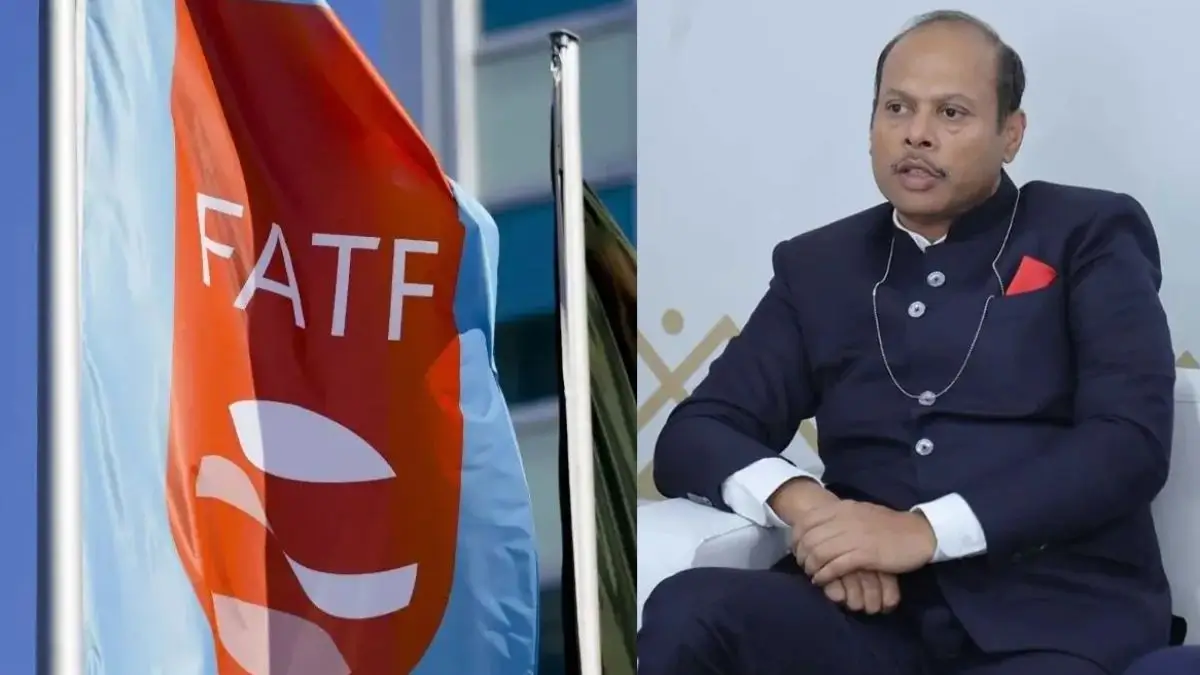
In a landmark diplomatic and strategic achievement, India has been elected to the Vice-Presidency of the Financial Action Task Force (FATF) for the very first time in its history. Furthermore, senior IAS officer Vivek Aggarwal, currently serving as Secretary in India’s Ministry of Culture, was elected at the FATF Plenary held in Paris from June 17 to 19, 2026 — and will serve as FATF Vice-President from July 2026 to June 2027. Moreover, this is the first time India has held the No. 2 position in the Paris-based global financial watchdog since it joined as a member in 2010.
The Ministry of External Affairs (MEA) called it a “major win” for India. Furthermore, MEA spokesperson Randhir Jaiswal said the appointment “reinforces India’s relentless focus on combating global terrorist financing networks and dismantling illicit financial systems.” In this blog, we explain what FATF is, who Vivek Aggarwal is, why this appointment matters, what it means for the Pakistan angle, and what India gains from this seat at the global financial governance table.
📖 Also Read: Amazon India $48 Billion Investment — AI, Cloud, 3.8 Million Jobs and What It Means for India
India FATF Vice President — Key Facts at a Glance
| Appointed Vice-President | Vivek Aggarwal |
| Term | July 2026 – June 2027 |
| Announcement | FATF Plenary, Paris — June 17–19, 2026 |
| Historic First | First Indian to hold FATF Vice-Presidency |
| Current Role (India) | Secretary, Ministry of Culture, Government of India |
| IAS Batch | 1994 Batch, Madhya Pradesh Cadre |
| Previous Key Role | Director, Financial Intelligence Unit-India (FIU-IND) |
| Also Served As | Head of India’s Delegation to FATF |
| Predecessor (Vice-President) | Giles Thomson (UK) — now FATF President from July 2026 |
| FATF President (2026–2028) | Giles Thomson, United Kingdom |
| Outgoing President | Elisa de Anda Madrazo, Mexico |
| India’s FATF Membership Since | 2010 (joined as 34th member) |
Note: All details are based on the official FATF Plenary outcomes published on June 19, 2026 and the Government of India’s Press Information Bureau (PIB) release.
What Is FATF? — A Simple Explanation
The Financial Action Task Force (FATF) is the world’s premier inter-governmental body that sets global standards to prevent money laundering, terrorist financing, and the financing of weapons of mass destruction. Furthermore, it was created by the G7 nations in Paris in 1989 — initially to combat drug-related money laundering. Moreover, after the September 11, 2001 attacks, FATF expanded its mandate to include terrorist financing, and in 2012, it added proliferation financing to its scope.
Today, FATF has 40 member countries, plus the European Commission and the Gulf Cooperation Council as member organisations. In addition, its rulebook — the FATF Recommendations — applies across more than 200 jurisdictions worldwide, including many countries that are not formal members. Notably, FATF does not impose sanctions directly. Instead, it evaluates countries’ financial systems and issues recommendations that have become the global benchmark for financial integrity — and those evaluations move markets.
FATF’s Two Most Powerful Tools — Grey List and Black List
| List Name | Formal Name | What It Means | Current Countries (2026) |
| Grey List | Jurisdictions Under Increased Monitoring | Country has strategic deficiencies; under active FATF oversight | Multiple — updated at each Plenary |
| Black List | Call for Action List | Highest level of concern; countries posing serious risk to global financial system | Iran, North Korea, Myanmar |
Notably, neither list carries formal legal sanctions — but both carry enormous real-world consequences. Furthermore, grey-listed countries face tighter compliance checks from banks, more cautious investors, and higher borrowing costs. Moreover, being blacklisted can effectively cut a country off from the global financial system as international correspondent banks reduce or eliminate exposure.
Who Is Vivek Aggarwal? — The Man India Sent to Lead FATF
Vivek Aggarwal is not a face familiar to most Indians — but within the world of global financial governance, he is one of India’s most experienced operators. Furthermore, he is a 1994-batch IAS officer from the Madhya Pradesh cadre who has spent significant portions of his career working at the intersection of finance, intelligence, and international policy. Moreover, his appointment is less a surprise pick and more the culmination of years of painstaking technical work inside the FATF system.
Key Career Milestones of Vivek Aggarwal
| Role | Organisation | Significance |
| Secretary, Ministry of Culture | Government of India (Current) | Current serving role at time of FATF appointment |
| Additional Secretary, Department of Revenue | Ministry of Finance | Oversight of financial crimes and enforcement |
| Director, FIU-IND | Financial Intelligence Unit — India | Led India’s primary financial intelligence agency — suspicious transactions, AML |
| Head of Indian Delegation to FATF | FATF, Paris | Represented India in global AML/CFT policy discussions and mutual evaluations |
On his appointment, Aggarwal said: “This appointment is a recognition of India’s collective effort and of the strength of our anti-money laundering and counter-terrorist financing framework. I am deeply honoured to serve, and look forward to working with the FATF Global Network to keep the international financial system safe, inclusive and resilient.”
Fact 1 — India’s Journey with FATF: From Observer to Vice-President
India’s relationship with FATF has come a long way. Furthermore, India first became an Observer at FATF in 2006 — meaning it could attend meetings and follow discussions but had no formal membership rights. Moreover, in June 2010, India was formally admitted as the 34th member of FATF, joining the body’s core decision-making structure.
For the next 16 years, India was an active but supporting member — participating in mutual evaluations, contributing to standard-setting discussions, and building its domestic AML (anti-money laundering) and CFT (counter-terrorist financing) frameworks. As a result of this sustained engagement and growing credibility, FATF members chose India for the Vice-Presidency in June 2026 — the first time India has held any leadership position in the organisation.
| Year | India’s FATF Milestone |
| 2006 | India becomes FATF Observer |
| 2010 | India joins as 34th full member of FATF |
| 2010–2024 | Active participation in mutual evaluations and standard-setting |
| 2024 | FATF issues India’s Mutual Evaluation Report — strong compliance noted |
| June 19, 2026 | India elected FATF Vice-President for the first time in history |
| July 2026 | Vivek Aggarwal assumes office as FATF Vice-President |
Fact 2 — What Does the FATF Vice-President Actually Do?
The Vice-President of FATF assists the President in steering the organisation’s work and carrying out its mandate. Furthermore, the role places an Indian official at the apex of the global standard-setting body for anti-money laundering and counter-terrorist financing. Moreover, the Vice-President participates in leadership-level discussions that shape the FATF’s priorities, agenda, and the standards it recommends to 200+ jurisdictions.
However, it is important to be clear about what the role does not include. The FATF Vice-President runs no enforcement machinery and cannot place a country on the grey list or black list alone. Furthermore, decisions on grey-listing and blacklisting emerge from technical reviews and consensus among all member states — not from the authority of any single officeholder. Moreover, the vice-presidency gives India a stronger voice in the room but not the power to determine outcomes unilaterally.
What the Vice-Presidency Does:
- Assists FATF President in steering the organisation’s agenda
- Represents the FATF leadership at international forums
- Participates in shaping the FATF Recommendations — the global rulebook
- Provides India a seat at the table during priority-setting discussions
- Gives India greater influence in conversations on digital payments, virtual assets, and terror financing standards
What the Vice-Presidency Does NOT Do:
- Cannot unilaterally grey-list or black-list any country
- Does not give India veto power over FATF decisions
- Cannot impose sanctions — FATF issues recommendations, not enforcement orders
Fact 3 — FATF June 2026 Plenary: What Else Was Decided?
The FATF Plenary held in Paris from June 17 to 19, 2026 was the sixth and final meeting under the Mexican Presidency of Elisa de Anda Madrazo. Furthermore, beyond India’s Vice-Presidential appointment, the Plenary took several other significant decisions that will shape global financial governance. Moreover, delegates from all 200+ jurisdictions in the FATF Global Network were present.
| Decision | Details |
| New FATF Vice-President | Vivek Aggarwal, India (July 2026 – June 2027) |
| New FATF President | Giles Thomson, UK (July 2026 – June 2028) |
| UK Presidency Priorities (2026–2028) | Combating large-scale fraud, strengthening risk-based supervision, improving public-private information sharing |
| Recommendation 6 Updated | Humanitarian exemption added — sanctions must not block humanitarian aid flows |
| Algeria — Grey List Removed | Successfully passed on-site visit; removed from increased monitoring |
| Namibia — Grey List Removed | Successfully passed on-site visit; removed from increased monitoring |
| New Observer — AFI | Alliance for Financial Inclusion (83 developing economy regulators) welcomed as Observer |
| Mutual Evaluations Adopted | Canada and Türkiye evaluated under the new round |
Fact 4 — The Pakistan Angle: What Does India’s FATF Role Mean?
No discussion of India’s FATF engagement is complete without addressing Pakistan. Furthermore, Pakistan has spent three separate periods on the FATF grey list — from 2008 to 2010, 2012 to 2015, and most significantly from 2018 to 2022. Moreover, the 2018–2022 grey listing came after FATF found serious deficiencies in Pakistan’s anti-money laundering and counter-terrorist financing frameworks, including concerns over financing of terror groups operating from Pakistani soil.
Following the Pahalgam terror attack in 2025, India indicated it would seek renewed scrutiny of Pakistan within the FATF framework. Furthermore, Aggarwal’s elevation has been welcomed by Indian officials as strengthening India’s hand in these efforts. Moreover, MEA sources have described the appointment as reinforcing India’s ability to raise concerns about terror financing at the highest levels of the global body.
However, experts urge caution about over-interpreting the appointment’s impact on Pakistan specifically. The FATF operates by consensus and through technical evaluations — not through any one country’s political will. As a result, while India now has a louder voice in the room, it cannot unilaterally push Pakistan back onto the grey list without a technical basis and member consensus.
Pakistan’s FATF History:
| Period | FATF Status | Reason |
| 2008–2010 | Grey List | First grey-listing — AML deficiencies |
| 2012–2015 | Grey List | Second grey-listing — terror financing concerns |
| 2018–2022 | Grey List | 34-point action plan — terror groups, charities, informal networks |
| October 2022 | Removed from Grey List | Completed all 34 action points; exited under increased monitoring |
| 2022–Present | Under Asia/Pacific Group Monitoring | Continued monitoring via regional body APG |
Fact 5 — Why India’s Digital Payments Expertise Matters Here
Beyond the geopolitics, India’s FATF Vice-Presidency carries significant weight in the realm of digital finance. Furthermore, the FATF is currently examining standards around stablecoins, unhosted wallets, virtual assets, and decentralised finance (DeFi) — all areas where India has rapidly growing expertise. Moreover, as one of the world’s largest real-time payments markets — with UPI processing billions of transactions monthly — India brings both practical experience and a strong stake in how these standards are written.
Specifically, the FATF’s future rules on virtual assets and digital payments will shape how India’s own fintech sector is regulated internationally. In addition, India’s experience with digital payments at scale gives Aggarwal a genuine voice when the FATF debates whether its standards fit the reality of large, fast-growing digital economies. As a result, this is where the Vice-Presidency may matter most — not in the geopolitics of grey lists, but in the technical standards that will govern the next decade of global finance.
Fact 6 — India’s Mutual Evaluation in 2024: The Foundation for This Win
India’s election to the FATF Vice-Presidency did not come out of nowhere. Furthermore, in 2024, the FATF published India’s Mutual Evaluation Report — a comprehensive technical assessment of India’s AML and CFT frameworks. Moreover, India received a strong evaluation, with the report noting significant improvements in India’s financial intelligence capabilities, legal frameworks, and enforcement effectiveness. Notably, at the time of the evaluation, Vivek Aggarwal was serving as Additional Secretary in the Department of Revenue — one of the key positions involved in India’s FATF engagement.
The strong 2024 mutual evaluation directly strengthened India’s credibility within the FATF network. Furthermore, it demonstrated that India was not just a large member country but a country with a genuinely effective AML/CFT system worthy of leadership trust. As a result, the Vice-Presidential appointment in 2026 was built on that technical foundation — not just on India’s geopolitical weight.
What MEA Said — Government’s Official Reaction
The Ministry of External Affairs described India’s FATF Vice-Presidency as a “major win” for the country. Furthermore, MEA spokesperson Randhir Jaiswal posted on social media that the appointment “reinforces India’s relentless focus on combating global terrorist financing networks and dismantling illicit financial systems.” Moreover, the Ministry of Culture — Aggarwal’s current ministry — posted that the appointment “reflects the immense trust and credibility India has built across more than 200 jurisdictions.”
In addition, the Government of India’s official press release through PIB called it “a landmark recognition of India’s growing leadership in the global fight against money laundering and terrorist financing.” As a result, this appointment has been embraced by the government across multiple ministries — MEA, Finance, and Culture — as a collective win for India’s international standing.
India FATF Vice President — Frequently Asked Questions (FAQs)
Who is India’s FATF Vice President?
Vivek Aggarwal, a 1994-batch IAS officer of the Madhya Pradesh cadre and currently Secretary in India’s Ministry of Culture, has been elected as FATF Vice-President. Furthermore, he will serve from July 2026 to June 2027. Moreover, he is the first Indian to hold this position since India joined FATF in 2010.
What is FATF?
FATF — the Financial Action Task Force — is a Paris-based inter-governmental body created by the G7 in 1989. Furthermore, it sets global standards to combat money laundering, terrorist financing, and proliferation financing. Moreover, its recommendations apply across more than 200 jurisdictions worldwide and are considered the global benchmark for financial integrity.
When was India elected FATF Vice President?
India was elected FATF Vice-President at the FATF Plenary held in Paris from June 17 to 19, 2026. Furthermore, Vivek Aggarwal will officially assume the role from July 2026. Moreover, this is the first time India has held any leadership position at FATF.
Is this the first time India has held the FATF Vice-Presidency?
Yes. This is the first time India has been elected to the FATF Vice-Presidency in its history as a member. Furthermore, India joined FATF as its 34th member in 2010 and had not held any leadership position until this appointment. Moreover, MEA has described this as a “major win” for India.
Can India now put Pakistan back on the FATF grey list?
Not directly. Furthermore, FATF decisions on grey-listing and black-listing are made through technical evaluations and consensus among all member states — not through the authority of any single officeholder. Moreover, while India’s Vice-Presidency gives it a stronger voice in the room, it does not give India the unilateral power to determine Pakistan’s fate on FATF lists.
Who is the current FATF President?
Giles Thomson of the United Kingdom is the incoming FATF President for the 2026–2028 term. Furthermore, he previously served as FATF Vice-President from July 2025 to June 2026 under the Mexican Presidency. Moreover, the UK Presidency’s priorities include combating large-scale fraud, strengthening risk-based supervision, and improving public-private information sharing.
When did India join FATF?
India became a FATF Observer in 2006 and was formally admitted as the 34th full member of FATF in June 2010. Furthermore, since then, India has actively participated in mutual evaluations and standard-setting within the FATF framework. Moreover, it received a strong mutual evaluation report in 2024, which laid the foundation for the 2026 Vice-Presidential appointment.
What is Vivek Aggarwal’s background?
Vivek Aggarwal is a 1994-batch IAS officer of the Madhya Pradesh cadre. Furthermore, he previously served as Director of the Financial Intelligence Unit-India (FIU-IND) — India’s primary financial intelligence agency. Moreover, he also headed India’s delegation to the FATF during crucial mutual evaluation and policy discussions, making him one of India’s most experienced FATF experts.
Conclusion — India’s New Seat at the Global Finance Table
India’s election as FATF Vice-President is not just a diplomatic trophy — it is a reflection of real, earned credibility built over 16 years of active FATF membership. Furthermore, Vivek Aggarwal’s appointment brings to the role someone who has lived inside the system — as FIU-IND Director, as head of India’s FATF delegation, and as a senior revenue official who navigated India’s 2024 mutual evaluation. Moreover, his technical depth is precisely what the FATF Vice-Presidency demands.
The strategic implications are significant. India now has a seat closer to the centre of the discussions that will shape global rules on money laundering, terror financing, digital assets, and virtual currencies — all areas directly relevant to India’s own financial system and national security priorities. However, the realistic expectation should be measured: this is a voice at the table, not a gavel. Furthermore, the FATF’s consensus-driven, technically-grounded process means no single country — however senior its representative — can dictate outcomes alone.
In conclusion, for a country that spent its first decade as a FATF member adapting to standards written by others, the bigger prize here is finally helping write them. Stay tuned to Mirrorly.in for all updates on India’s global diplomacy and financial governance news.
📖 Also Read: WhatsApp New CEO: Kunal Shah Named WhatsApp Global Head — Everything You Need to Know