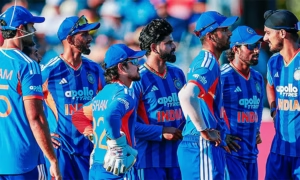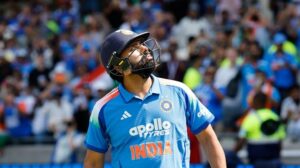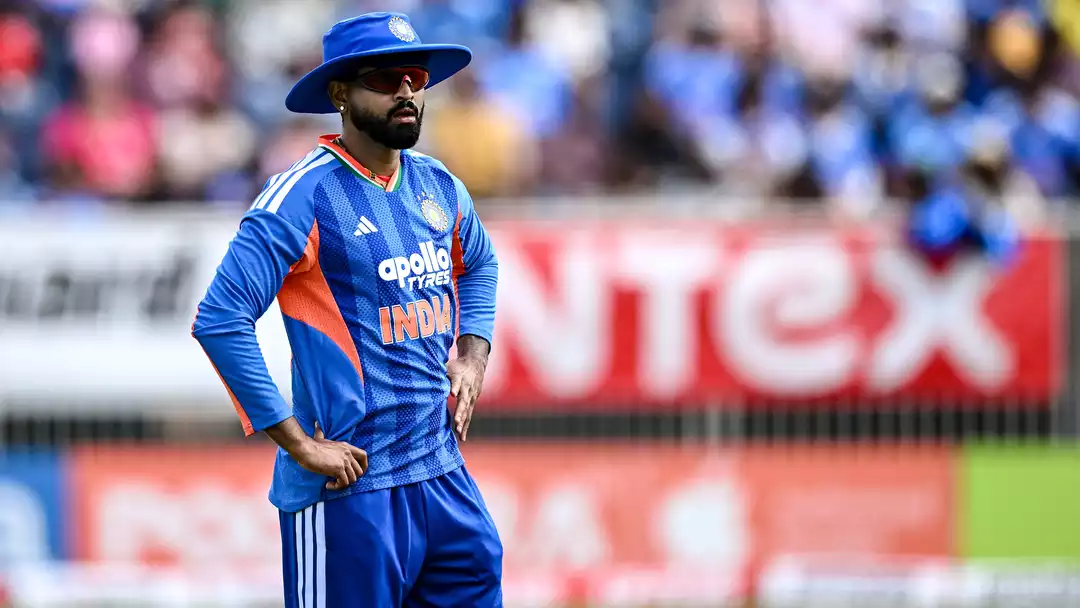
India’s T20I struggles under Shreyas Iyer hit a new low on Tuesday. At Trent Bridge, England handed the tourists their heaviest defeat by runs in the format’s history. Chasing 202, India collapsed to just 76 all out in 11.4 overs. That’s their second-lowest total ever in T20Is. As a result, England now lead the five-match series 2-0, after the opening game was washed out.
For Iyer, the pain went beyond the scoreline. He took over the captaincy from Suryakumar Yadav during the Ireland leg of the tour. Since then, his wait for a first win as India’s T20I skipper has only grown longer.
Match at a Glance
| Match | England vs India — 3rd T20I |
| Date | Tuesday, July 7, 2026 |
| Venue | Trent Bridge, Nottingham |
| Result | England won by 125 runs |
| England Score | 201/7 in 20 overs |
| India Score | 76 all out in 11.4 overs |
| Series Status | England lead 2-0 (5 matches, 1st game washed out) |
| Player of the Match | Jofra Archer (England) |
| Record | India’s heaviest defeat by runs in T20I history |
Note: All statistics are sourced from match reports and official scorecards.
How England Built Their Total
India won the toss and chose to bowl first. Early on, their pace attack held its own. Arshdeep Singh opened with a maiden over to Phil Salt. Then, Prince Yadav made an instant impact on only his second T20I appearance. He bowled Jos Buttler with a sharp yorker after Buttler had struck 36 off 21 balls. Later, Yadav also removed Harry Brook, who mistimed a pull straight to deep mid-wicket. Consequently, England slipped to 111 for 4 after 12 overs, and the game hadn’t run away from India just yet.
However, Phil Salt anchored the innings throughout. He eventually reached a commanding fifty and finished with 70 off 44 balls, hitting six fours and three sixes. He then added a 47-run stand with Sam Curran, who stayed unbeaten on 41 off 24 balls. A late cameo of 14 off seven balls from Will Jacks, including two sixes, pushed England to 201 for 7. At the halfway stage, the total looked competitive. By the end of the chase, it proved to be far beyond India’s reach.
India’s Batting Collapse
India’s chase fell apart almost immediately. Abhishek, who had looked fluent in the first two matches of the series, fell trying to force Josh Tongue over the off side. Ishan Kishan briefly counter-attacked but was caught in the deep. Iyer’s own attempt to flick Jofra Archer found the only fielder placed behind square. Meanwhile, Axar Patel, promoted up the order, edged behind while expecting a short ball but getting a fuller length instead. By the end of just five overs, India were 52 for 5, and the match was effectively over.
India’s batting order also drew scrutiny. Harshit Rana was pushed up to No. 7 inside the powerplay, ahead of Shivam Dube. However, the move did little to stop the slide. Dube eventually came in at No. 8 and lasted only four balls before Tongue beat him for pace with another short delivery. In the end, only four Indian batters reached double figures, and none crossed 13. Archer finished with three wickets, while Tongue picked up four, as India’s total of 76 became their second-lowest in T20I history, behind only their 74 all out against Australia back in 2008.
India Bowling — vs England
| Bowler | Key Wickets |
| Prince Yadav | Jos Buttler (bowled), Harry Brook (caught) |
| Arshdeep Singh | Opened with a maiden over |
| Harshit Rana | Contributed in the middle overs |
England Bowling — vs India
| Bowler | Wickets | Key Impact |
| Josh Tongue | 4 | Ran through India’s middle and lower order |
| Jofra Archer | 3 | Named Player of the Match, dismissed Iyer |
Shreyas Iyer’s Reaction — “Atrocious” Batting

Speaking after the match, Iyer didn’t hold back on his assessment of India’s batting. He described the performance in blunt terms, saying “I think it was atrocious. I couldn’t use a better word, honestly.” He added that losing by such a large margin isn’t acceptable, and that the team needs to go back to the drawing board. Iyer also felt the surface didn’t justify England’s total, noting that India lost several wickets inside the powerplay and that this early collapse effectively decided the match.
Key Talking Points
1. India’s Longest Winless Streak Since the World Cup
This defeat marks India’s longest winless stretch in T20Is since they lifted the T20 World Cup title earlier this year. Since then, the side has lost four completed matches and faced one no-result, all under a leadership transition still finding its footing. Just months ago, India were riding one of their most dominant runs in the format. Now, they face a very different reality.
2. A Captaincy Under Real Pressure
Iyer inherited the captaincy from Suryakumar Yadav, who was removed after India’s earlier T20 World Cup success and subsequently lost his place in the side due to poor batting form. Five games into his tenure, with one washed out, Iyer is yet to register a win. Former India international Dinesh Karthik noted that there are currently more questions than answers surrounding both Iyer’s captaincy and the team’s broader form, though he added that this stretch also offers Iyer a genuine chance to lead from the front and earn the dressing room’s respect.
3. England’s Pace Attack Exposes a Familiar Weakness
The collapse highlighted India’s ongoing struggle to adapt to extra bounce, seam movement, and pace-off variations in English conditions. Archer and Tongue exploited this with genuine pace, and the result raises fresh questions about how well India’s batting order is built for challenging overseas conditions, rather than just white-ball pitches back home.
4. Series on the Line in Bristol and Southampton
With England now 2-0 up, India must win both remaining matches simply to draw the series. A series defeat would follow closely on the heels of a 2-0 series sweep against Ireland earlier on this tour, adding further pressure on both Iyer and head coach Gautam Gambhir heading into the final two games.
How This Tour Has Unfolded So Far
This defeat didn’t happen in isolation. It came at the end of a difficult stretch for India’s white-ball side on English soil. Before arriving in England, India had been swept 2-0 by Ireland, a result that already raised eyebrows given the side’s recent World Cup pedigree. That whitewash meant Iyer walked into the England leg of the tour already under pressure, needing a strong response rather than more slippage.
Instead, the tour has followed the same troubling pattern. The opening T20I against England was washed out without a ball being bowled, denying Iyer an early chance to open his account as captain. England then won the second match comfortably, before Tuesday’s result at Trent Bridge turned a difficult series into a genuinely alarming one. Taken together, these results mean India have now gone through an entire five-match stretch, across two countries, without a single win under their new captain.
What Head Coach Gautam Gambhir Is Up Against
The scrutiny from this defeat doesn’t fall on Iyer alone. Head coach Gautam Gambhir now faces pointed questions about the direction of India’s white-ball setup following the World Cup triumph. Team transitions are rarely smooth, and India’s is unfolding in full public view, with a new captain, a reshuffled batting order, and several fringe players like Prince Yadav and Vaibhav Sooryavanshi being tested in high-pressure conditions rather than eased in gradually.
Some of that experimentation has shown promise. Prince Yadav, playing only his second T20I, looked genuinely sharp with the new ball, dismissing both Jos Buttler and Harry Brook. However, positive individual performances haven’t been enough to offset the collective batting failures that have defined this tour. Gambhir will likely face questions about squad balance, team selection, and whether India’s death bowling and top-order batting are truly suited to English conditions, where extra bounce and seam movement have repeatedly caused problems.
Why English Conditions Keep Troubling India
India’s struggles at Trent Bridge weren’t an isolated incident tactically either. Historically, Indian batting line-ups built around spin-friendly, low-bounce pitches back home have often found the adjustment to English conditions difficult, especially early in a tour. Extra bounce off a good length, combined with genuine pace from bowlers like Archer and Tongue, tends to expose technical gaps that rarely show up on flatter surfaces elsewhere.
This series has reinforced that pattern. England’s bowlers consistently targeted back-of-a-length deliveries, which either climbed awkwardly into the bat or skidded through low, depending on the seam position. India’s batters, set up for power-hitting on flatter tracks, struggled to adjust their shot selection in real time. That mismatch, more than any single dismissal, explains why the collapse from 52 for 5 felt almost inevitable once the powerplay wickets started falling.
The Road Ahead — Bristol and Southampton
India’s immediate task is straightforward on paper, even if it looks daunting after Trent Bridge. They must win both remaining matches, in Bristol and then Southampton, simply to draw the series 2-2. Anything less, and India will suffer back-to-back series defeats on this tour, first to Ireland and then to England, a result that would sit uncomfortably against their status as reigning T20 World Cup champions.
For Iyer personally, the next two matches carry outsized importance. A first win as captain would ease some of the immediate pressure and give the dressing room a much-needed morale boost. On the other hand, a continued winless run heading into the series decider would intensify questions not just about tactics, but about whether the current leadership group has the right mix of experience and form to steady the ship. Cricket commentators have repeatedly pointed out that captaincy under pressure is as much about communication and clarity as it is about results on the field, and how Iyer manages the group over the next week will likely shape perceptions of him well beyond this series.
Individual Performances Worth Watching
Beyond the team-level concerns, this defeat also puts individual spots under the microscope. Abhishek’s dismissal, though avoidable, came after two performances where he looked India’s most fluent batter, suggesting the young opener remains one of the few genuine positives from the tour so far. Ishan Kishan’s brief counter-attack, while ultimately unsuccessful, showed some intent that India may look to build on in the remaining games.
On the bowling side, Prince Yadav’s performance stood out as one of the tour’s few unambiguous bright spots. Picking up the wickets of both Jos Buttler and Harry Brook in just his second international appearance signals genuine potential, and selectors will likely be keen to give him an extended run in the XI over the next two matches. By contrast, senior players like Shivam Dube, who managed just four balls before being dismissed, will face pointed questions about their place in the squad if the batting struggles continue at this scale.
What This Means for India’s T20 World Defence
Zooming out, this series carries significance well beyond its own five matches. As reigning T20 World Cup champions, India will eventually have to defend their title, and results like this one inevitably feed into broader conversations about squad depth and readiness. A dominant white-ball side can occasionally lose a bilateral series without much long-term damage. However, a pattern of collapses against genuine pace, combined with an unsettled captaincy, is the kind of red flag that selectors and team management typically can’t afford to ignore for long.
The next few months, then, become just as important as the remaining two matches of this series. How India responds — through selection choices, batting order adjustments, and support for Iyer’s leadership — will offer an early signal of whether this defeat becomes a turning point or simply one bad night in a longer rebuilding process.
Full Match Statistics
| Statistic | England | India |
| Score | 201/7 (20 overs) | 76 all out (11.4 overs) |
| Top Scorer | Phil Salt — 70 off 44 | None crossed 13 |
| Batters in Double Figures | — | 4 |
| Best Bowling | Prince Yadav — 2 wickets | Josh Tongue — 4 wickets |
| Margin of Victory | 125 runs — India’s heaviest T20I defeat by runs | |
Frequently Asked Questions (FAQs)
Why did India lose by 125 runs to England?
India were bowled out for just 76 runs in 11.4 overs while chasing 202. A batting collapse inside the powerplay, where India lost five wickets for 52 runs, effectively decided the match.
Has Shreyas Iyer won any match as India’s T20I captain?
No. Iyer took over the captaincy from Suryakumar Yadav during the Ireland series and remains winless in five matches as captain, with one game washed out.
What is India’s biggest defeat in T20I history?
This 125-run loss to England at Trent Bridge is now India’s heaviest defeat by runs in T20I history.
Who was the Player of the Match?
Jofra Archer won Player of the Match for England, finishing with three wickets, including the dismissal of captain Shreyas Iyer.
What is the current status of the India vs England T20I series?
England lead the five-match series 2-0, after the first game was washed out. India must win both remaining matches, in Bristol and Southampton, to draw the series.
Conclusion — A Difficult Chapter for Iyer’s Captaincy
India’s 125-run defeat at Trent Bridge wasn’t just about the scoreline. It exposed deeper concerns about batting depth, adaptability in seam-friendly conditions, and a leadership transition still searching for stability. Iyer’s blunt post-match assessment showed he understands the scale of the problem. Still, turning that honesty into results will require a big response in the two remaining matches. For now, his wait for a first win as India’s T20I captain continues, and so does the scrutiny that comes with leading a reigning world champion side through a difficult stretch.
Stay tuned to Mirrorly.in for full coverage of the England vs India T20I series.