Europe Heatwave 2026: Records Smashed, 1,300+ Dead — And India Battles Its Own Extreme Heat

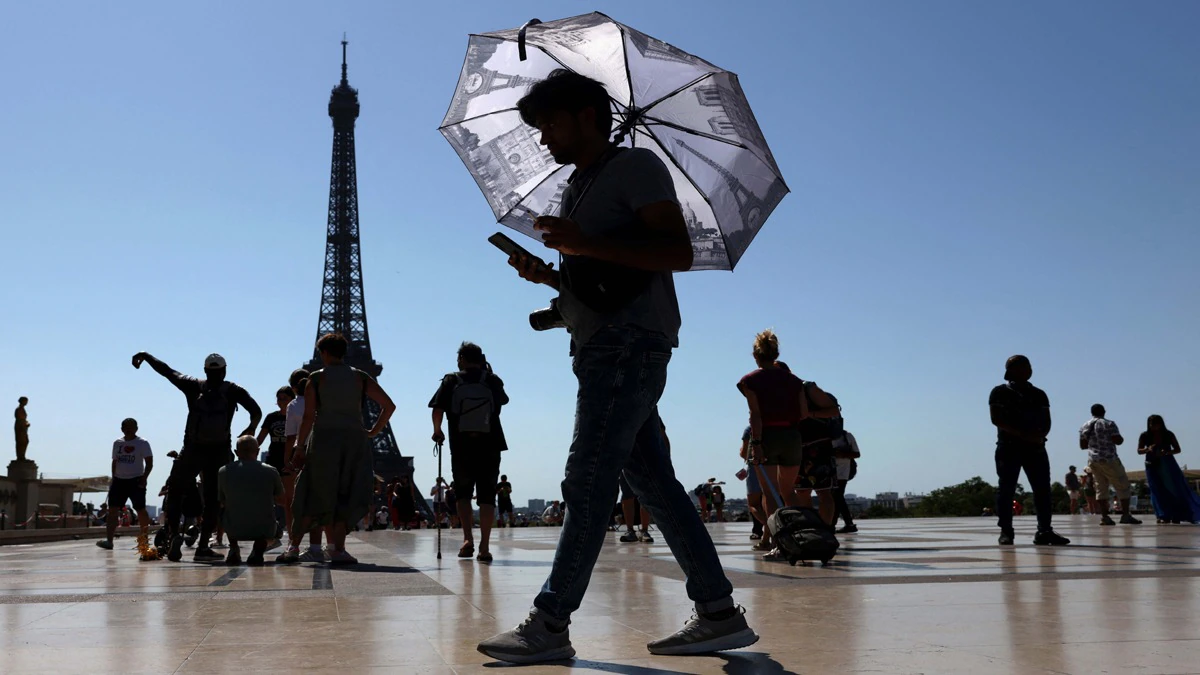
A historic and deadly heatwave has gripped Europe through June 2026, shattering temperature records in country after country and leaving more than 1,300 people dead. Germany breached 40°C, France recorded its hottest day since measurements began in 1947, and the UK logged its hottest June day ever. Meanwhile, India has spent its own summer fighting extreme heat, with parts of Rajasthan touching 44.5°C and the India Meteorological Department issuing repeated heatwave warnings across the country.
Two continents, two very different climates, one common thread: a warming planet is making summers more dangerous than ever before. This blog covers everything happening in Europe right now, what India has experienced this season, why both crises are connected, and the safety steps experts recommend if you find yourself caught in extreme heat.
📖 Also Read: AI Technology Is Upgrading Faster Than Ever — Here Is What It Means for Your Future
Europe Heatwave 2026 — Key Facts at a Glance
| Heatwave Started | June 21, 2026 (second and most severe wave) |
| Countries Affected | France, UK, Germany, Spain, Portugal, Italy, Netherlands, Belgium, Poland, Czech Republic, Denmark, Ireland, Sweden |
| Excess Deaths (WHO Estimate) | 1,300+ since June 21 |
| France Deaths | ~1,000 excess deaths reported by national health agency |
| Spain Deaths | 327 heat-attributed deaths since June 21 |
| Hottest Temperature Recorded | 44.3°C in France (Paris area) — hottest day since 1947 |
| UK Record | 38°C — hottest June day ever recorded (beat 1976 record) |
| Germany Peak | 41°C — autobahns buckling in the heat |
| Cause | Persistent “Omega block” high-pressure system pulling Saharan heat north |
| India’s Hottest Reading | 44.5°C at Sri Ganganagar, Rajasthan |
| India States Most Affected | Rajasthan, Gujarat, Maharashtra, Madhya Pradesh, Odisha, Chhattisgarh |
Note: All figures are based on WHO estimates, national health agencies, IMD bulletins, and verified news reports as of June 30, 2026. Heat-death tolls are typically undercounted initially and tend to rise as excess-mortality data is finalised.
Europe Heatwave 2026 — How It Unfolded
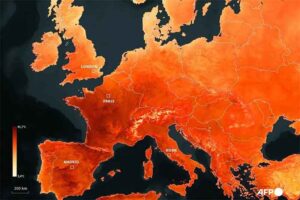
Europe’s brutal summer actually began weeks before most people noticed. The first heatwave struck in late May 2026, with temperatures running 10 to 15°C above normal and breaking records for the warmest spring on record. Western Europe felt it hardest, with France, the UK and Ireland posting unusual highs even before summer officially began.
Then, just before the summer solstice, a second and far more severe heatwave arrived on June 17. A stubborn high-pressure system — nicknamed an “Omega block” because of its shape on weather maps — dragged scorching air north from the Sahara and parked it directly over Western Europe. Temperatures peaked between June 20 and 23, pushing past 44°C in parts of Spain and Portugal and setting all-time records across multiple countries simultaneously.
| Date | Event |
| May 24, 2026 | First heatwave begins — temperatures 10-15°C above normal across Western Europe |
| June 17, 2026 | Second, more severe heatwave begins as “Omega block” forms over Europe |
| June 20-23, 2026 | Peak heat — Spain and Portugal near 44°C, hottest readings of the entire event |
| June 21, 2026 | France goes on red alert — 49 of 96 mainland departments under top heat warning |
| June 23, 2026 | France’s hottest day since 1947 — 44.3°C recorded near Paris |
| June 25-27, 2026 | Heat dome shifts east — Germany hits 41°C, Italy issues highest-level alerts for 16 cities |
| June 28, 2026 | France reports 1,000 excess deaths; WHO confirms 1,300+ across Europe |
| June 29, 2026 | Cooler Atlantic air begins pushing in — heat starts breaking down over Spain, France and Benelux |
Europe Heatwave 2026 — Country by Country Breakdown
France — Hardest Hit
France bore the brunt of this heatwave more than any other nation. The country recorded its hottest day since measurements began in 1947, with temperatures reaching 44.3°C in the Paris region on June 23. Cities across central France — Poitiers, Pissos, and others — broke records that had stood since 1947, with multiple locations exceeding 106°F (41°C).
The human cost has been severe. France’s public health agency reported roughly 1,000 excess deaths, with most fatalities among people aged 65 and older. Officials confirmed at least 18 deaths directly, including two young children found unconscious in a hot car in Carpentras and three elderly residents who died in the Bordeaux region. The interior minister noted that ambulance services responded to more than 122,000 emergency calls during the peak of the heat. Severe lightning storms also struck northern France immediately after the heatwave broke.
United Kingdom — Hottest June on Record
The UK’s Met Office issued a rare red extreme heat warning — a level reserved for the most dangerous conditions. Temperatures reached 38°C, breaking the previous June record of 35.6°C that had stood since 1976. Overnight temperatures stayed unusually high too, remaining above 20°C in many urban areas, denying residents the relief of cooler nights.
Germany — Records and Infrastructure Strain
Germany breached 40°C, with peaks reaching close to 41°C in several regions. The heat proved strong enough to buckle sections of the autobahn highway network. At least seven people died in swimming accidents over a single weekend as residents flocked to lakes and rivers to cool off. One location, Kubschuetz in eastern Germany, recorded a night that never fell below 29.4°C — the warmest night since German records began almost 150 years ago.
Spain and Portugal — The Hottest Core
The Iberian Peninsula experienced the most extreme readings of the entire event. Pinhão in Portugal and Andújar in Spain both recorded 42.7°C on June 21 — the heatwave’s single highest temperatures. Spain’s national mortality monitoring system linked 327 deaths to the heat between June 21 and June 26 alone. A 90-year-old man died in a nursing home in Bizkaia, and a 68-year-old man died from heatstroke in Almería. Portugal saw nearly nationwide “tropical nights,” where overnight low temperatures never dropped below 20°C.
Italy, Poland and Eastern Europe
As the heat dome shifted eastward in late June, Italy placed its highest-level heat alert on 16 major cities including Rome, Milan, Florence, Turin and Verona. At least five heat-related deaths were confirmed in Italy, including two farm workers and a homeless man. Poland faced a sharply increased wildfire risk due to low spring rainfall, recording 40.5°C in Słubice on June 28. Several Polish municipalities set up public water curtains, and the national railway warned of deformed tracks and offered refunds for weekend travel.
Fact 1 — Why Was This Heatwave So Much Worse?
Climate scientists at World Weather Attribution have been blunt about the cause: human-induced climate change made this heatwave dramatically more likely and more intense. According to their analysis, the temperatures recorded in June 2026 would have been virtually impossible to occur in 1976 — and even by 2003 standards, this kind of daytime heat would have been about 10 times less likely, while the nighttime temperatures would have been over a hundred times less likely.
Researchers found that June is warming faster than any other month across large parts of Western Europe. Daily maximum temperatures are warming at roughly triple the rate of global warming overall, while nighttime temperatures are warming at about twice that rate. Many European capital cities experienced not just their hottest June three-day stretch, but their hottest three-day period since 1950, according to long-term climate datasets.
Fact 2 — The Hidden Danger: Heat and Humidity Together
One of the most dangerous aspects of this heatwave involves a measurement most people have never heard of: wet-bulb globe temperature (WBGT), which combines heat and humidity into a single risk figure. During the peak of the European heatwave between June 18 and 29, an estimated 45% of European cities breached indoor WBGT safety thresholds — meaning even staying inside offered limited protection in many buildings never designed for such extreme conditions.
The danger compounds in cities specifically. Urban heat island effects, ageing building stock, and socioeconomic inequality combine to intensify exposure for the people least able to escape it. Many homes, schools, transport systems and energy networks across Europe simply were not built to handle prolonged extreme heat — a gap that experts say urgently needs retrofitting, passive cooling, and heat-resilient urban design.
Fact 3 — Europe’s Infrastructure Buckled Under the Strain
Beyond the human toll, this heatwave exposed how unprepared European infrastructure remains for extreme heat. Germany’s autobahns buckled under the temperature. The Netherlands halted drawbridge operations across multiple cities after malfunctions caused by heat expansion, stranding ship traffic for days. Sweden saw a 600-metre freight train derail near Bollebygd after heat-induced track warping, though no injuries were reported.
Energy systems also came under pressure. Increased cooling demand combined with reduced wind power generation caused French day-ahead electricity prices to jump 29% in a single day in late May. Officials warn that as France forms a key part of the continent’s power network, generation restrictions during heatwaves could tighten regional electricity supplies and worsen what experts now call Europe’s growing “summer energy poverty.”
India Heatwave 2026 — What Has Happened This Summer
While Europe’s crisis unfolded through May and June, India has been managing its own extended battle with extreme heat throughout the 2026 pre-monsoon season. The India Meteorological Department forecast above-normal heatwave days across the east, central, northwest and southeast peninsula regions for the April-to-June period — and that forecast largely held true.
By mid-April, states including Madhya Pradesh, Maharashtra, Odisha and Chhattisgarh were already recording temperatures between 43°C and 45°C — unusually early for such extreme readings. The IMD’s hottest confirmed reading of the season came from Sri Ganganagar in Rajasthan, which touched 44.5°C, with several regions running 5°C or more above normal.
| India Heatwave 2026 — Key Numbers | |
| Hottest Temperature Recorded | 44.5°C — Sri Ganganagar, Rajasthan |
| Earliest Extreme Heat Recorded | 43-45°C by mid-April in MP, Maharashtra, Odisha, Chhattisgarh |
| Most Vulnerable States | Rajasthan, Gujarat, Maharashtra, Bihar, Jharkhand, West Bengal, Odisha, Telangana |
| Typical Heatwave Days Forecast | 2 to 8 heatwave days per region during the season |
| “All 50 Hottest Cities” Record | On a single day in late April, all 50 of the world’s hottest cities were in India |
| Relief Timeline | Southwest Monsoon advanced steadily through June, bringing relief to most regions by late June |
Note: India’s heatwave data is sourced from official IMD bulletins and press releases. Despite viral social media claims of a continuous nationwide heatwave, IMD clarified there was no confirmation of an uninterrupted heatwave spanning the entire pre-monsoon season.
Fact 4 — India’s Heat Problem Is Not a One-Year Event
What stands out most about India’s 2026 heat season is not that it was unprecedented — it wasn’t, in the strictest sense — but that it represents a continuing, worsening trend. According to the IMD, heatwave frequency across India’s core heat zone has increased by 0.1 days per decade since 1961, while total heatwave duration has grown by 0.44 days per decade. Average nighttime temperatures are rising by roughly 0.21°C per decade, with 35 of India’s 36 states and union territories getting hotter at night.
This pattern matters enormously because nighttime heat denies the body its natural recovery window. Early-onset heatwaves are especially dangerous because people have not yet acclimatised to extreme conditions when they arrive. The elderly, infants, outdoor workers and pregnant women face the sharpest risk — not just from the absolute temperature, but from how rapidly the shift occurs.
Fact 5 — The Economic Cost India Cannot Ignore
India’s heat crisis carries a massive economic price tag that often goes unreported alongside the human one. Roughly three-quarters of India’s workforce — about 380 million people — work in heat-exposed sectors, primarily agriculture and construction. A 2024 Lancet study found that nearly one-third of India’s heatwave days that year were directly driven by climate change, with heat exposure causing the loss of 247 billion potential labour hours and an estimated economic loss of approximately $194 billion.
Agriculture takes a particularly hard hit. Research shows that each 1°C increase in temperature causes an average wheat yield loss of roughly 8% nationally, with the worst-affected regions losing between 15% and 25% of their yields during severe heatwave years. In 2022, extreme heat forced India to ban wheat exports entirely. The UN has warned that the combined stress on farmers, livestock and crops from rising heat is pushing food supply systems “to the brink.”
India vs Europe Heatwave 2026 — Side-by-Side Comparison
| Factor | Europe 2026 | India 2026 |
| Peak Temperature | 44.3°C (France) | 44.5°C (Rajasthan) |
| Timing | Late May and June | April through June (pre-monsoon) |
| Confirmed Deaths | 1,300+ (WHO estimate) | Not centrally confirmed — historically undercounted |
| Why It’s Unusual | First time many nations exceeded record highs typically seen only in August | Consistent with a worsening multi-decade trend, not a single anomaly |
| Infrastructure Built For Heat? | Largely no — most buildings and grids designed for milder climate | Partially — but still inadequate for outdoor workers and informal housing |
| Worst-Hit Group | Elderly (65+) and isolated/shut-in residents | Outdoor workers, farmers, the elderly, and the urban poor |
| Relief | Cooler Atlantic air arriving from June 29 | Southwest Monsoon bringing relief through June |
Heatwave Safety — What Experts Recommend
Whether you live in a heatwave-hit European city or a heat-stressed Indian state, public health experts agree on the same core set of precautions. The India Meteorological Department, the British Red Cross, UNICEF and the European Commission have all issued near-identical safety guidance during this 2026 heat season.
- Stay hydrated constantly — drink water regularly even if you don’t feel thirsty; include fluids like coconut water, ORS and lemon water
- Avoid peak sun hours — limit outdoor activity during the hottest part of the afternoon, typically noon to 4 PM
- Dress for the heat — wear light-coloured, loose, breathable clothing
- Check on vulnerable people — regularly check on elderly relatives, neighbours living alone, infants and pets
- Never leave children or pets in parked cars — even briefly, as car interiors can become lethal within minutes
- Store food and medicine properly — extreme heat can spoil food and degrade medication faster than usual
- Swim only in supervised areas — heatwaves significantly increase drowning risk as more people seek water to cool off
- Know the warning signs — heat exhaustion symptoms include heavy sweating, dizziness and nausea; heatstroke is a medical emergency requiring immediate attention
Europe and India Heatwave 2026 — Frequently Asked Questions (FAQs)
How many people have died in the Europe heatwave 2026?
The World Health Organization estimates more than 1,300 excess deaths across Europe since June 21, 2026. France accounts for roughly 1,000 of these deaths, while Spain has confirmed 327 heat-attributed fatalities. Officials caution that heat-related deaths are typically undercounted initially, meaning final totals will likely rise as excess-mortality data is finalised over the coming weeks.
What was the hottest temperature recorded in Europe in 2026?
France recorded its hottest day since measurements began in 1947, reaching 44.3°C near Paris on June 23. Spain and Portugal recorded the heatwave’s single highest readings — 42.7°C at Pinhão (Portugal) and Andújar (Spain) on June 21. The UK also set a new June record of 38°C, beating its previous record of 35.6°C set in 1976.
What caused the Europe heatwave 2026?
A persistent high-pressure system known as an “Omega block” dragged hot, dry air from the Sahara Desert north over Western Europe, trapping it in place for over a week. Climate scientists at World Weather Attribution confirmed that human-induced climate change made this heatwave significantly more likely and intense than it would have been in past decades.
What is India’s hottest temperature recorded in 2026?
India’s hottest confirmed reading of the 2026 pre-monsoon season was 44.5°C at Sri Ganganagar, Rajasthan. Several other regions, including parts of Madhya Pradesh, Maharashtra, Odisha and Chhattisgarh, recorded temperatures between 43°C and 45°C as early as mid-April, well ahead of the typical peak summer period.
Which Indian states are most affected by heatwaves?
The IMD identified Rajasthan, Gujarat, Maharashtra, Bihar, Jharkhand, West Bengal, Odisha and Telangana as particularly vulnerable during the 2026 heatwave season. Above-normal heatwave days were forecast across parts of east, central, northwest India and the southeast peninsula for the April to June period.
Is the Europe heatwave connected to India’s heatwave?
Both events stem from the same underlying driver — a warming planet caused by climate change — but they are not directly linked weather systems. Europe’s heatwave resulted from a Saharan heat dome parked over the continent, while India’s heat pattern follows its typical pre-monsoon cycle, intensified over recent decades by rising baseline temperatures. Both regions illustrate how climate change is making extreme heat more frequent, more intense, and more dangerous worldwide.
When will the Europe heatwave end?
Cooler Atlantic air and thunderstorms began moving into Western Europe from June 29, ending the most intense heat over Spain, France and the Benelux region. The last hot spots remained over Germany, Poland and the Balkans, with forecasters expecting conditions to clear by around July 1, 2026.
What is wet-bulb temperature and why does it matter?
Wet-bulb temperature combines heat and humidity into a single measurement of how effectively the human body can cool itself through sweating. Researchers have established that a wet-bulb temperature of 35°C is the threshold beyond which even a healthy, resting adult with ample water and shade can experience a fatal rise in core body temperature within hours — making humidity just as dangerous as raw heat.
Conclusion — A Warning Both Continents Cannot Afford to Ignore
The Europe heatwave of 2026 and India’s extended battle with extreme heat this season tell the same underlying story from two very different parts of the world. Records that once stood for decades — 1947 in France, 1976 in the UK — fell within days of each other. Meanwhile, India’s pattern of worsening nighttime heat and earlier heatwave onset continues a multi-decade trend that scientists have tracked since 1961.
What makes 2026 different is not that these events are unprecedented — researchers note that nearly every recent heatwave gets called “unprecedented” in the moment. What makes this year significant is the scale and simultaneity: a continent built around temperate summers buckling under Saharan-level heat, alongside a tropical nation watching its already-hot summers grow longer and more humid. Together, they offer a stark preview of what a warming world increasingly looks like — for everyone, everywhere.
Stay tuned to Mirrorly.in for ongoing coverage of global weather events, climate news, and safety updates as both Europe and India continue navigating this extraordinary summer.
📖 Also Read: India vs England 2026 — Full Schedule, Squads, Key Players and Series Preview