Satluj Movie Controversy Explained: Diljit Dosanjh’s Film Pulled From India Just Two Days After Release

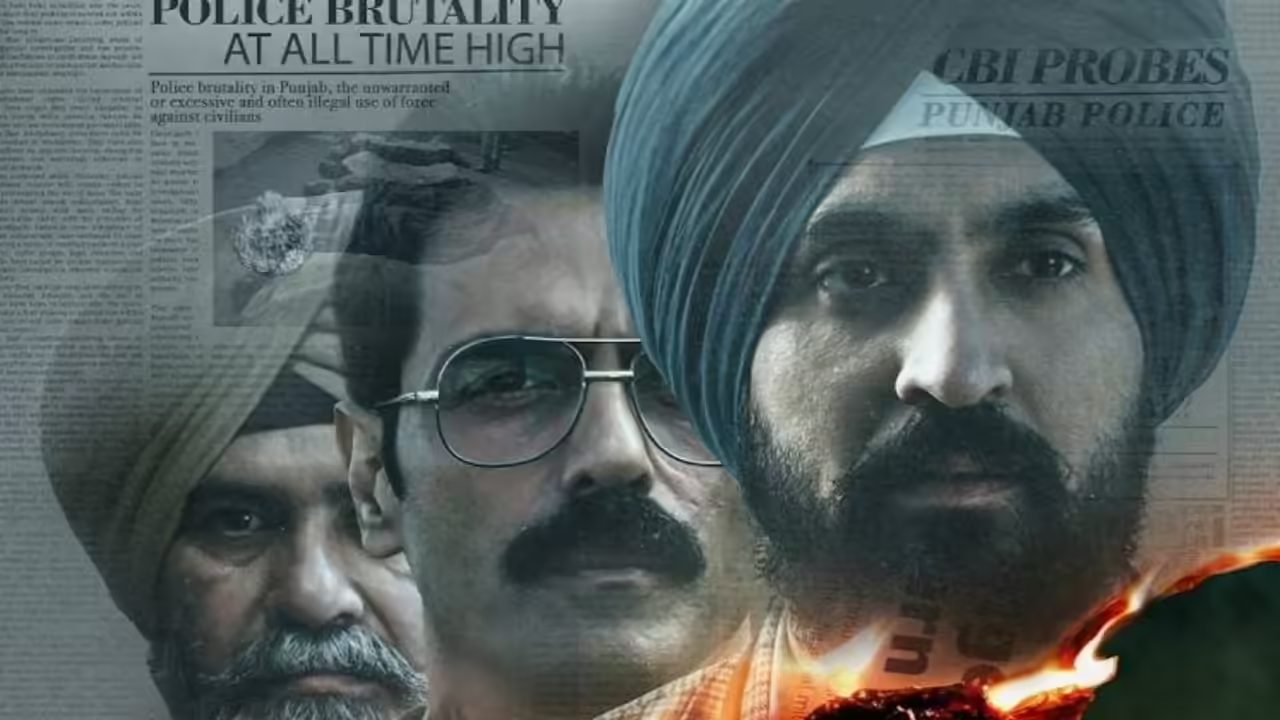
This Satluj movie controversy has become one of 2026’s biggest entertainment stories, and it’s spilled well beyond film circles into Punjab’s wider political conversation. Directed by Honey Trehan and starring Diljit Dosanjh, Satluj streamed on ZEE5 for less than 48 hours in India before the platform pulled it from its Indian catalogue. The film remains available internationally on ZEE5 Global. Below is a full timeline of what happened, why it matters, and where things stand now.
📖 Also Read: Another India T20 Defeat: England Complete Ruthless 4-0 Series Sweep In Southampton
Satluj Movie Controversy: Quick Facts
| Film | Satluj (originally titled Punjab ’95) |
| Director | Honey Trehan |
| Lead Cast | Diljit Dosanjh, Arjun Rampal, Kanwaljit Singh |
| Based On | The life of human rights activist Jaswant Singh Khalra |
| Platform | ZEE5 (released July 3, 2026) |
| Removed From India | July 5, 2026 (within ~48 hours) |
| Reason Cited | Unspecified “current developments” |
| Government Response | MIB formed an Inter-Departmental Committee on July 7 |
| Certification Battle | Nearly 4 years, 127 proposed cuts by CBFC |
Note: Details in this report are drawn from multiple published news reports, including ThePrint, India TV News, Forbes, and Dawn.
Who Was Jaswant Singh Khalra, and What Is Satluj About?
To understand this Satluj movie controversy, it helps to know the real story behind it. Satluj draws on the life of Jaswant Singh Khalra, a human rights activist who investigated alleged illegal cremations and enforced disappearances during Punjab’s militancy years in the 1990s. Khalra’s work exposed how security forces had allegedly cremated the bodies of hundreds of people without identifying them or informing their families.
His investigations came at a devastating personal cost. Khalra himself was abducted in 1995 and later found to have been murdered. Several Punjab police officers were eventually convicted for their role in his killing. Decades later, his story remains one of the most sensitive chapters of Punjab’s recent history, which is part of why a film built around it was always likely to draw scrutiny.
The Long Road to Release: A Nearly Four-Year Certification Battle
Satluj’s journey to screens started years before this controversy erupted. Shooting began in January 2022, and principal photography wrapped by October that year. In December 2022, the makers submitted the film, then titled Punjab ’95, to the Central Board of Film Certification (CBFC) for approval.
What followed was a prolonged standoff. The CBFC reportedly sought extensive changes, including as many as 127 proposed cuts, along with demands to change the film’s title and even alter Khalra’s name within the narrative. The filmmakers refused to dilute the story, leading to a certification battle, court proceedings, and a cancelled international premiere that stretched on for almost four years. The delay became a widely discussed case study within the Indian film industry, with many producers and directors closely following how it would eventually resolve.
A Quiet Release, Then a Sudden Removal
After years of uncertainty, the makers eventually renamed the film Satluj and chose a direct digital premiere over a conventional theatrical release. On July 3, 2026, Satluj began streaming on ZEE5 without any major prior announcement or promotional campaign, a notably low-key rollout for a film with this much history behind it.
The quiet approach didn’t last long. Word spread quickly, and the film drew strong reviews along with heavy online discussion. Then, on July 5, just two days after its debut, ZEE5 pulled Satluj from its Indian catalogue entirely. The platform confirmed the move through an Instagram post, thanking viewers for their support while stating the film would remain unavailable in India “until further notice.” ZEE5 attributed the decision to unspecified “current developments” without offering further explanation. Notably, Satluj remained accessible internationally through ZEE5 Global even after its Indian removal.
The Government Steps In: MIB Forms a Review Committee
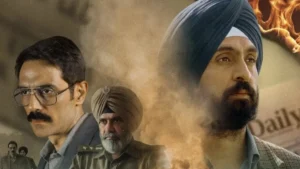
Two days after the film’s removal, on July 7, India’s Ministry of Information and Broadcasting (MIB) constituted a high-level Inter-Departmental Committee (IDC) to examine Satluj’s content. The committee’s review is expected to shape what happens to the film going forward, though its findings and timeline have not yet been made public.
This formal government review adds an official layer to a controversy that had, until that point, largely played out between the streaming platform, the filmmakers, and public opinion. It also means the fate of Satluj in India now rests, at least partly, on the outcome of a bureaucratic process rather than a purely commercial or editorial decision by ZEE5 alone.
Political Reactions to the Satluj Controversy
As with most stories touching on Punjab’s militancy-era history, this Satluj movie controversy quickly picked up a political dimension. Union Minister Ravneet Bittu publicly denied that the BJP-led central government had any role in the film’s removal. He said no government order had been issued, stating instead that ZEE5 took the decision independently.
That denial hasn’t fully settled the debate. Some political commentators and analysts have questioned the official explanation, pointing to the scale of the CBFC’s 127 proposed cuts as evidence of the film’s sensitive content, while also noting the platform’s ownership ties. Commentary in outlets like ThePrint has explored competing theories about why the film was pulled so quickly after release, and who might stand to benefit politically from the ongoing controversy, particularly with Punjab heading toward state elections early next year. It’s worth noting that these theories remain speculative and contested, with no single explanation confirmed as fact.
From Streaming Ban to Community Screenings
Rather than fading away after its removal from ZEE5, the Satluj movie controversy took an unusual turn. The film’s unavailability sparked a volunteer-driven exhibition movement, with community screenings springing up in village squares and gurdwara courtyards across Punjab. According to reports, these grassroots screenings have now spread across five Indian states, effectively creating an alternative distribution network entirely outside official channels.
This response has added a new dimension to the broader conversation around censorship and free expression in India. Rather than limiting the film’s reach, its removal from OTT arguably expanded public engagement with it, turning a streaming takedown into a genuinely grassroots cultural moment. Commentators have noted that this pattern, official restriction followed by informal, community-driven circumvention, has become an increasingly familiar dynamic in disputes over sensitive content in India.
Why This Isn’t the First Diljit Dosanjh Film to Court Controversy

This isn’t the first time a major Diljit Dosanjh project has generated this kind of public debate. His earlier film, Amar Singh Chamkila, also touched on politically and culturally sensitive Punjab history and drew its own share of discussion upon release. Industry commentators have pointed out a recurring pattern: Dosanjh’s biggest, most acclaimed film projects tend to tackle subjects tied closely to Punjab’s turbulent recent past, and that choice consistently invites scrutiny from certification boards, political stakeholders, and the public alike.
That pattern also helps explain why the Satluj controversy resonated so strongly, so quickly. Audiences who had followed Dosanjh’s earlier work already associated him with films willing to engage difficult historical material, which likely fueled both the anticipation around Satluj’s release and the intensity of reaction once it was pulled.
The Bigger Debate: Censorship, OTT Regulation, and Free Expression
Beyond the specifics of this one film, the Satluj movie controversy has reignited a larger conversation about how streaming content gets regulated in India. Unlike theatrical releases, which require CBFC certification, OTT platforms have historically operated under a lighter, self-regulatory framework. Satluj’s case, an already CBFC-scrutinised project that still faced removal after reaching OTT audiences, has raised fresh questions about how consistent and predictable that framework actually is in practice.
Critics of the platform’s decision have also pointed to what they describe as inconsistent content policies, noting that other politically contentious films remain available on the same platform without similar removal. Whether that inconsistency reflects genuine legal or regulatory concerns specific to Satluj, or a different underlying reason, remains an open question that the MIB’s review may or may not clarify.
What Happens Next in the Satluj Movie Controversy
For now, the future of Satluj in India hinges on the Inter-Departmental Committee’s review. The committee is expected to examine the film’s content and relevant circumstances before any further action gets considered, though no public timeline has been confirmed for when that process will conclude. Meanwhile, ZEE5 has stated it is exploring what it called the appropriate legal process, without detailing what that process might involve.
In the meantime, public interest in the film shows no sign of slowing down. Community screenings continue to expand across Punjab, and the controversy remains a regular topic of discussion across entertainment coverage, legal commentary, and political analysis. With state elections approaching, it’s likely the film’s fate, and the broader questions it has raised about censorship and political influence over OTT content, will remain in the news for some time yet.
How the Film Industry Has Reacted
Reaction from within the Indian film industry to this Satluj movie controversy has been notably layered. Some filmmakers and industry figures have voiced concern over what they see as a troubling precedent, arguing that a film clearing years of certification scrutiny should not then face abrupt removal after its official, approved release. Others have taken a more cautious stance, preferring to wait for the Inter-Departmental Committee’s findings before drawing firm conclusions about what actually prompted ZEE5’s decision.
Critics who reviewed Satluj during its brief window of availability were largely positive, praising its performances and its unflinching treatment of a difficult chapter in Punjab’s history. That critical reception has added another layer to the controversy, since it undercuts any suggestion that the removal stemmed from concerns about the film’s quality or craftsmanship rather than its subject matter. For many observers, the contrast between strong reviews and a swift takedown is precisely what has kept the story in the headlines well beyond its first week.
Comparing Satluj to Past OTT Censorship Disputes
This isn’t the first time an Indian streaming release has run into controversy shortly after going live, though the speed and scale of the Satluj removal stand out even by that standard. In recent years, several web series and films dealing with religious, political, or historically sensitive material have faced backlash, legal notices, or voluntary edits after release, as platforms navigated an OTT regulatory landscape that remains considerably less defined than the CBFC’s theatrical certification process.
What sets the Satluj case apart is the sequence of events. Rather than facing objections before release, as is typical, the film had already cleared years of CBFC scrutiny, undergone content negotiations, and received what amounted to a final green light before its digital premiere. Its removal after release, rather than before, is part of why legal commentators have described this case as unusual, and why some believe it could become an important reference point for future disputes over OTT content regulation in India.
Why Timing Matters: Punjab’s Upcoming Elections
Part of what has made this Satluj movie controversy so politically charged is its timing. Punjab is headed toward state elections early next year, and the state’s political landscape currently features a fairly fragmented mix of established parties, including the Congress, the Akali Dal, and AAP, alongside a smaller but vocal radical political current. Against that backdrop, any controversy touching on Punjab’s militancy-era history carries the potential to shift voter sentiment in ways that are difficult to predict cleanly.
Political commentators have offered competing theories about which parties or factions stand to gain or lose from the controversy, though these remain analytical speculation rather than confirmed outcomes. Some analysis suggests that renewed public attention to this period of history could deepen disaffection among voters who already feel alienated from mainstream Punjab politics, potentially benefiting more radical political currents rather than the state’s established parties. Others caution against reading too much into a single controversy this far ahead of an actual election. What’s clear is that the controversy has become entangled with Punjab’s broader political conversation in a way that a routine streaming dispute rarely would.
Public Sentiment: A Story That Refuses to Fade
Perhaps the most striking element of this Satluj movie controversy is how little the removal has dampened public interest. If anything, the takedown appears to have amplified curiosity about the film, turning what might have been a modest digital release into a story followed closely by entertainment journalists, legal commentators, and political analysts alike. Search interest, social media discussion, and coverage across national and international outlets, including the BBC, have all remained elevated well past the film’s brief streaming window.
That sustained attention also reflects something broader about how audiences today respond to perceived censorship. Rather than accepting a platform’s removal decision as final, many viewers have actively sought out alternative ways to engage with the film’s story, whether through community screenings or continued online discussion of its themes. In that sense, this controversy has become a case study in how difficult it can be, in the current media environment, to fully suppress interest in a piece of content once it has already reached the public, even briefly.
Key Talking Points From This Satluj Movie Controversy
1. A Certification Battle That Foreshadowed This Moment
The CBFC’s demand for 127 cuts, along with requests to alter both the title and Khalra’s name, signalled early on just how sensitive this project was considered. In hindsight, that lengthy certification fight looks like a preview of the resistance the film would continue to face even after clearing that hurdle.
2. The Speed of the Removal Raised Immediate Questions
A film pulled within 48 hours of release, without a detailed public explanation, was always going to invite speculation. ZEE5’s vague reference to “current developments” left a vacuum that political commentators, critics, and fans have all rushed to fill with their own theories.
3. Government Denial Hasn’t Ended the Political Debate
Despite Ravneet Bittu’s clear denial of any central government role, suspicion about political motives persists in parts of Punjab’s public discourse, particularly given the timing relative to the state’s upcoming elections.
4. Grassroots Screenings Show the Limits of Digital Takedowns
The rise of community screenings in gurdwaras and village squares demonstrates that removing a film from a streaming platform doesn’t necessarily stop people from watching it. If anything, the controversy appears to have widened public interest in the film’s story.
Satluj Movie Controversy: Frequently Asked Questions (FAQs)
What is the Satluj movie controversy about?
The Satluj movie controversy centers on ZEE5’s removal of the Diljit Dosanjh-starrer Satluj from its Indian catalogue just two days after its July 3, 2026 release, sparking debate over censorship, political influence, and free expression.
Why was Satluj removed from ZEE5 in India?
ZEE5 cited only unspecified “current developments” for the removal, saying the film would remain unavailable in India “until further notice” while it explored the appropriate legal process.
Is Satluj still available anywhere?
Yes. The film remains available internationally on ZEE5 Global, even though it has been removed from ZEE5’s Indian platform.
What is Satluj based on?
Satluj is based on the life of human rights activist Jaswant Singh Khalra, who investigated alleged illegal cremations and enforced disappearances during Punjab’s militancy years before being abducted and murdered in 1995.
Has the government responded to the Satluj controversy?
Yes. India’s Ministry of Information and Broadcasting formed an Inter-Departmental Committee on July 7, 2026, to review the film’s content, while Union Minister Ravneet Bittu denied any role by the central government in its removal.
How are people watching Satluj despite its removal?
Volunteer-driven community screenings have sprung up in gurdwara courtyards and village squares across five Indian states, creating an informal distribution network outside official streaming channels.
Why did the CBFC demand so many cuts to the film originally?
The CBFC reportedly requested around 127 cuts, along with changes to the film’s title and Jaswant Singh Khalra’s name, citing concerns tied to the film’s sensitive subject matter, which delayed its release by nearly four years.
Could the Satluj movie controversy affect Punjab’s upcoming elections?
Some political commentators believe renewed attention to Punjab’s militancy-era history could influence voter sentiment ahead of the state’s elections next year, though this remains speculative analysis rather than a confirmed outcome.
Conclusion — A Controversy Still Unfolding
The Satluj movie controversy shows no sign of resolving quickly. What began as the long-awaited release of a film based on Jaswant Singh Khalra’s life has evolved into one of Punjab’s most closely watched political and cultural stories of 2026. Between the ongoing MIB review, competing political narratives, and a grassroots screening movement that has taken the film directly to communities across the state, Satluj has become far bigger than a single streaming release.
Whatever the Inter-Departmental Committee eventually concludes, this episode has already reopened a broader debate about how India regulates OTT content, how much space exists for films engaging with sensitive historical events, and how political timing can shape public perception of even routine platform decisions. With Punjab’s state elections approaching, this story is likely to remain in the headlines for months to come.
For now, the most tangible outcome of this controversy may be the one nobody involved in the official decision-making appears to have anticipated: a film pulled from a major streaming platform has ended up reaching audiences in village squares and gurdwara courtyards across Punjab, arguably more intimately than a standard digital release ever could have. Whether the Inter-Departmental Committee’s eventual findings restore Satluj to India’s official streaming catalogue, or leave its fate unresolved for the foreseeable future, the controversy has already left a lasting mark on how audiences, filmmakers, and policymakers think about the relationship between sensitive historical storytelling and India’s evolving approach to digital content regulation.
Stay tuned to Mirrorly.in for further updates on the Satluj movie controversy.
📖 Also Read: Another India T20 Defeat: England Complete Ruthless 4-0 Series Sweep In Southampton