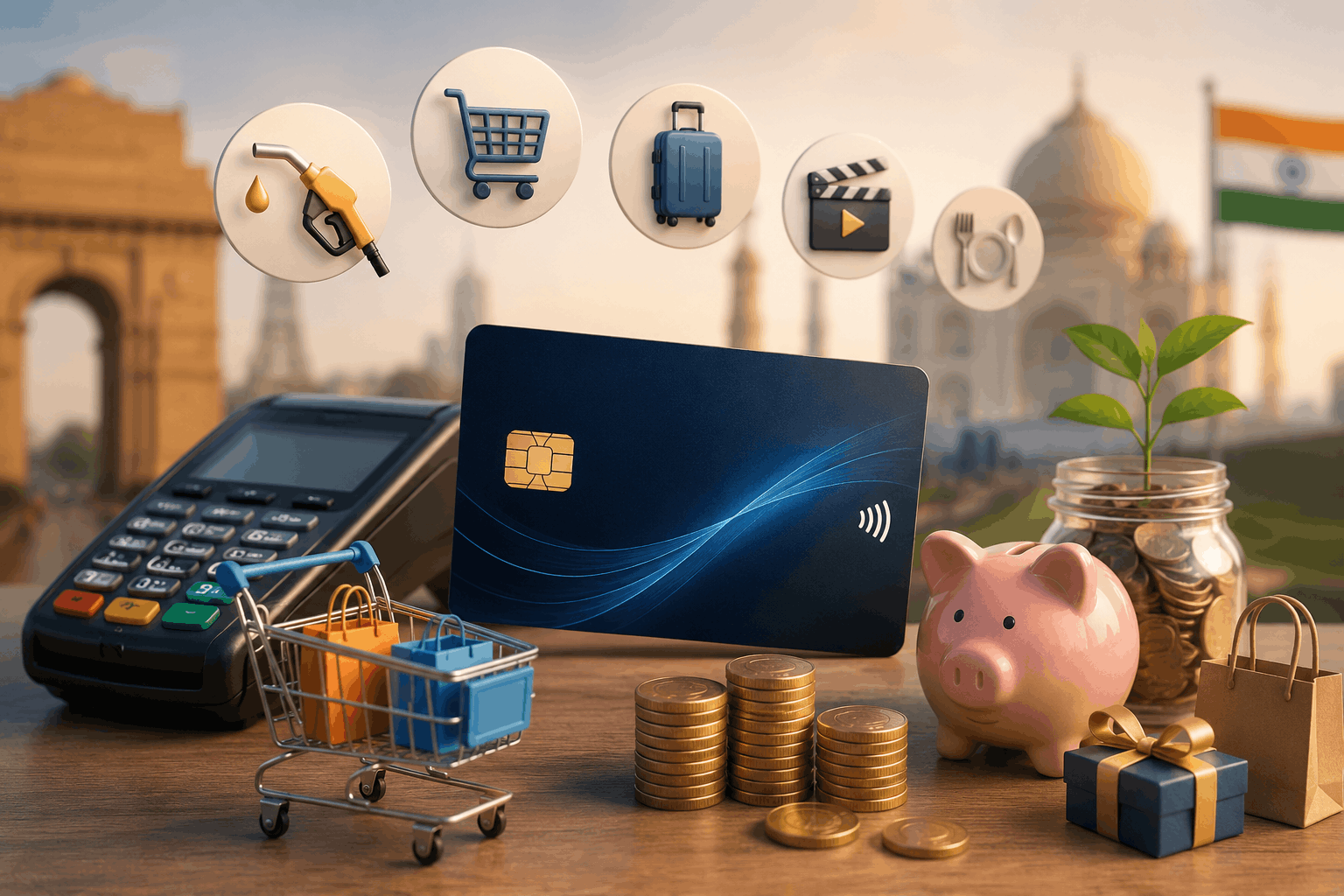
Credit cards are one of the most powerful financial tools available to Indians in 2026 — but only if you know how to use them smartly. Furthermore, most Indians either avoid credit cards out of fear of debt, or use them carelessly and end up paying huge interest charges. Neither approach is ideal. Moreover, the right credit card strategy can save you thousands of rupees every month through cashback, rewards points, travel miles, and exclusive discounts.
In this blog, we share 15 of the best credit card tips India 2026 — practical, actionable advice that will help you maximise your card benefits, protect your CIBIL score, avoid common debt traps, and make your credit card work FOR you rather than against you. Furthermore, these tips apply whether you are a first-time cardholder or a seasoned credit card user looking to optimise your spending.
📖 Also Read: Rice, Roti and Rising Diabetes — What Is Really on India’s Dinner Plates?
Credit Card Tips India — Key Facts First
| Credit card users in India | 100 million+ in 2026 |
| Average interest rate | 36-42% per annum (3-3.5% per month) |
| Grace period | 20-55 days — interest free if paid in full |
| Minimum payment trap | Paying minimum due = 36%+ interest on balance |
| CIBIL score ideal range | 750-900 for best loan rates |
| Credit utilisation ideal | Keep below 30% of credit limit |
| Reward points value | Varies — 0.25% to 5% depending on card |
Tip 1 — Always Pay Your Full Bill, Never Just the Minimum
This is the single most important credit card tip in India — or anywhere in the world. Furthermore, it is also the most commonly ignored one. When your credit card bill arrives, always pay the full outstanding amount before the due date. Never pay just the minimum amount due.
Here is why this matters so much: if you pay only the minimum due, the bank charges interest on the entire remaining balance — not just what is left unpaid. Moreover, Indian credit card interest rates range from 36% to 42% per annum. In addition, this interest compounds monthly, meaning your debt can grow extremely rapidly if you only make minimum payments.
Example — The Minimum Payment Trap:
| Credit Card Bill | Rs 50,000 |
| Minimum Due Paid | Rs 2,500 (5%) |
| Remaining Balance | Rs 47,500 |
| Monthly Interest (3%) | Rs 1,425 added next month |
| If only minimum paid | Takes 8+ years to clear debt! |
Tip 2 — Credit Card Tips India: Use the Grace Period Wisely
Every credit card in India offers a grace period — typically between 20 and 55 days — during which you can use the credit and pay it back without any interest charges. Furthermore, this is essentially free credit for up to 55 days. Moreover, smart credit card users time their large purchases at the start of their billing cycle to maximise this interest-free period.
For example, if your billing cycle runs from the 1st to the 30th of the month and your payment due date is the 25th of the following month, a purchase made on the 1st gives you 55 days of free credit. In addition, planning your big purchases — electronics, travel bookings, appliances — around your billing cycle start date maximises this benefit.
Tip 3 — Keep Your Credit Utilisation Below 30%
Your credit utilisation ratio is the percentage of your total credit limit that you are currently using. Furthermore, this is one of the most important factors in your CIBIL score calculation. Moreover, keeping your credit utilisation below 30% of your total credit limit is essential for maintaining a healthy credit score.
For example, if your credit card limit is Rs 1,00,000, try to keep your outstanding balance below Rs 30,000 at any given time. In addition, if you regularly spend more than 30% of your limit, consider requesting a credit limit increase from your bank — this automatically reduces your utilisation ratio without changing your spending.
Credit Utilisation and CIBIL Score:
| Below 10% | Excellent — best impact on CIBIL |
| 10% – 30% | Good — healthy credit profile |
| 30% – 50% | Average — moderate CIBIL impact |
| 50% – 75% | Poor — CIBIL score drops |
| Above 75% | Very poor — significant CIBIL damage |
Tip 4 — Maximise Your Reward Points and Cashback
One of the biggest advantages of credit cards in India is the rewards ecosystem. Furthermore, most cards offer reward points, cashback, or travel miles on every transaction. Moreover, smart credit card users align their spending categories with their card’s best reward rates.
For example, if your card gives 5X reward points on dining and travel, use that card specifically for restaurant bills and flight bookings. In addition, use a cashback card for grocery and fuel purchases. Furthermore, accumulate reward points strategically and redeem them for high-value options — flight tickets, hotel stays, or statement credits — rather than low-value merchandise.
Best Reward Categories on Indian Credit Cards:
- HDFC Regalia / Infinia — best for travel rewards and lounge access
- SBI SimplyCLICK — best for online shopping (Amazon, Flipkart)
- Axis Magnus — best for travel and reward point value
- ICICI Amazon Pay — best for Amazon purchases (5% cashback)
- Flipkart Axis Bank — best for Flipkart shopping (5% cashback)
Tip 5 — Set Up Auto-Pay to Never Miss a Due Date
Missing a credit card payment due date has two serious consequences. First, the bank charges a late payment fee — typically Rs 500 to Rs 1,300 depending on your outstanding balance. Furthermore, it also triggers interest charges on your entire outstanding balance from the transaction date. Moreover, it negatively impacts your CIBIL score.
The simplest solution is to set up auto-pay through your bank’s net banking or mobile app. In addition, set it to auto-debit the full outstanding amount on the due date every month. Furthermore, set a calendar reminder 5 days before the due date as an additional backup.
Tip 6 — Credit Card Tips India: Never Withdraw Cash From ATM
Using your credit card to withdraw cash from an ATM is one of the most expensive financial mistakes you can make. Furthermore, cash advances on credit cards in India attract an immediate cash advance fee — typically 2.5% to 3.5% of the withdrawn amount. Moreover, interest starts accruing immediately from the day of withdrawal — there is no grace period.
In addition, some banks charge a higher interest rate on cash advances than on regular purchases — sometimes up to 3.5% per month or 42% per annum. Therefore, never use your credit card to withdraw cash from an ATM under any circumstances.
Tip 7 — Protect Your CIBIL Score With Smart Credit Behaviour
Your CIBIL score is your financial reputation — and credit cards have a significant impact on it. Furthermore, a high CIBIL score (750+) gives you access to better loan rates, higher credit limits, and premium card upgrades. Moreover, the following credit card behaviours directly improve your CIBIL score over time.
Habits That Improve CIBIL Score:
- Pay full bill amount every month — never miss a payment
- Keep credit utilisation below 30%
- Do not apply for multiple credit cards simultaneously
- Maintain old credit cards — card age improves CIBIL score
- Avoid frequent credit limit enhancement requests
- Check your CIBIL report annually for errors — dispute them if found
Tip 8 — Use Airport Lounge Access Benefits
Many premium credit cards in India offer complimentary airport lounge access — a benefit worth thousands of rupees per visit. Furthermore, airport lounges offer free meals, beverages, Wi-Fi, comfortable seating, and sometimes even spa services. Moreover, if you travel frequently, this benefit alone can justify the annual fee of a premium card.
Cards like HDFC Regalia, Axis Magnus, SBI Elite, and ICICI Sapphiro offer multiple free lounge visits per quarter. In addition, some cards also offer Priority Pass membership, which gives access to 1,300+ lounges worldwide. Therefore, always check your card’s lounge access benefits before booking business class or paying for lounge entry at the airport.
Tip 9 — Understand and Use EMI Conversion Wisely
Most Indian credit cards offer the option to convert large purchases into EMIs — Equated Monthly Instalments. Furthermore, this can be a useful tool for managing cash flow on big-ticket items like electronics, appliances, or travel bookings. Moreover, many cards offer zero-cost EMI — where the interest is actually subsumed in the product price or waived by the bank.
However, be careful with EMI conversions. In addition, always check whether the EMI option includes processing fees, and whether the interest rate makes financial sense. Furthermore, avoid converting regular monthly expenses into EMI — this is a sign of financial stress and can lead to a debt spiral.
Tip 10 — Credit Card Tips India: Watch Out for Hidden Charges
Credit cards in India come with several charges that many users are unaware of. Furthermore, these hidden charges can significantly erode the value of your rewards and cashback. Moreover, always read your credit card’s most important terms document carefully before applying.
Common Credit Card Charges in India:
| Annual Fee | Rs 500 to Rs 10,000+ — check if waived on spending |
| Late Payment Fee | Rs 100 to Rs 1,300 depending on balance |
| Cash Advance Fee | 2.5% to 3.5% of amount withdrawn |
| Foreign Currency Fee | 1.5% to 3.5% on international transactions |
| Overlimit Fee | Rs 500+ if you exceed credit limit |
| Fuel Surcharge | 1% — most cards waive on fuel transactions |
Tip 11 — Get Your Annual Fee Waived
Most credit cards in India waive the annual fee if you spend above a certain threshold in the previous year. Furthermore, this threshold varies by card — for example, spending Rs 1.5 lakh per year on the HDFC MoneyBack card waives its annual fee completely. Moreover, this makes the card effectively free while still giving you all the rewards and benefits.
Always check your card’s annual fee waiver threshold and make sure your annual spending crosses it. In addition, if you are close to the threshold near your card anniversary date, use the card for a large necessary purchase to cross it.
Tip 12 — Use Different Cards for Different Categories
Advanced credit card users in India maintain multiple cards — each optimised for a specific spending category. Furthermore, this card stacking strategy maximises rewards across all your spending. Moreover, the key is to choose cards that complement each other rather than overlap.
Smart Card Stacking Example:
- Amazon/Flipkart card — for all online shopping
- Fuel card — for petrol and diesel purchases
- Travel card — for flights, hotels, cab bookings
- Dining card — for restaurants and food delivery
- General cashback card — for all other spending
Tip 13 — Track Your Spending With Card Statements
Your monthly credit card statement is one of the most valuable financial documents you receive. Furthermore, reviewing it carefully every month helps you track your spending patterns, identify unnecessary expenses, and catch any fraudulent transactions. Moreover, most Indian banks now offer detailed spending category breakdowns in their mobile apps.
Set aside 15 minutes each month to review your statement. In addition, check for any charges you do not recognise and report them to your bank immediately. Furthermore, use spending data to identify categories where you can cut back and redirect money to savings or investments.
Tip 14 — Protect Yourself From Credit Card Fraud
Credit card fraud is a growing problem in India. Furthermore, phishing calls, fake OTP requests, and card skimming are common fraud methods used by criminals. Moreover, protecting yourself requires active awareness and good security habits.
Credit Card Safety Tips:
- Never share your OTP, CVV, or full card number with anyone — including bank representatives
- Enable transaction alerts via SMS and email for every transaction
- Set a daily transaction limit on your card through net banking
- Use virtual credit card numbers for online transactions where available
- Cover the keypad when entering your PIN at ATMs or POS machines
- Regularly check your card statement for unauthorised transactions
Tip 15 — Credit Card Tips India: Choose the Right Card for Your Lifestyle
Finally — and most fundamentally — the best credit card for you depends entirely on your lifestyle and spending patterns. Furthermore, there is no universally ‘best’ credit card. Moreover, the right card maximises rewards on what you actually spend money on.
Choose Your Card Based on Your Lifestyle:
| Lifestyle | Recommended Card | Key Benefit |
| Frequent Traveller | Axis Magnus / HDFC Infinia | Lounge + travel miles |
| Online Shopper | Amazon Pay ICICI / Flipkart Axis | 5% cashback online |
| Fuel Spender | BPCL SBI Card / HPCL Coral | Fuel surcharge waiver |
| Restaurant Lover | Swiggy HDFC / Zomato RBL | Food delivery cashback |
| First Time User | SBI SimplySAVE / HDFC MoneyBack | Easy approval + cashback |
Conclusion — Credit Card Tips India 2026
Credit cards are not dangerous — misusing them is. Furthermore, with the right knowledge and discipline, a credit card can be one of the most powerful tools in your financial arsenal — saving you thousands of rupees every month through rewards, cashback, and exclusive benefits. Moreover, a well-managed credit card history builds the CIBIL score that unlocks better loans, lower interest rates, and premium financial products.
In conclusion, follow these 15 credit card tips for India and transform your card from a potential debt trap into a genuine wealth-building tool. Furthermore, remember the golden rule — always pay your full bill on time, every time. In addition, use your card’s rewards strategically and never spend more than you can afford to repay.
Stay tuned to Mirrorly.in for more finance tips, money-saving guides, and smart living advice for Indians in 2026!
📖 Also Read: RBI Plastic Currency Notes India 2026 — Complete Guide