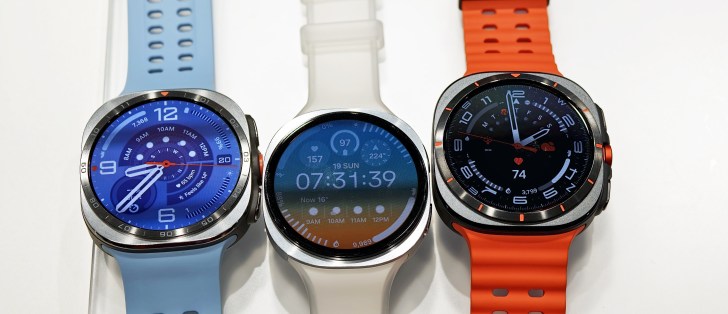
Samsung’s new smartwatches are promising something no Wear OS device has offered before. The company is giving the Galaxy Watch Ultra2 and Galaxy Watch9 five years of updates, covering both major software upgrades and security patches. That’s a full year longer than the previous generation, and it puts Samsung well ahead of Google’s own Pixel Watch on software longevity.
📖 Also Read: Meta AI App Personalised Children Stories: Inside StoryKit, Meta’s New Storytelling Pilot
Five Years Of Updates: Quick Facts
| Watches Covered | Galaxy Watch9 and Galaxy Watch Ultra2 |
| Software Support | 5 major OS upgrades + 5 years of security patches |
| Support Ends | 2031 |
| Ships With | Wear OS 7, One UI 9 Watch |
| Announced At | Galaxy Unpacked, London, July 22, 2026 |
| Global Launch | August 7, 2026 |
| Galaxy Watch9 Price | Starts at $379 / €409 |
| Galaxy Watch Ultra2 Price | Starts at $699 |
Note: Details in this report are based on coverage from GSMArena, Engadget, 9to5Google, SamMobile, Android Authority, and Android Central.
What “Five Years Of Updates” Actually Covers
Samsung confirmed to SamMobile that this commitment includes both full major Wear OS upgrades for five years, meaning five separate OS updates, and five years of security patches running in parallel. In practical terms, that means the Galaxy Watch9 and Galaxy Watch Ultra2, launched this year on Wear OS 7, should keep receiving major software upgrades through 2031, alongside continuous security fixes over the same window.
This is a genuine step up from Samsung’s previous policy. Since the Galaxy Watch 4, Samsung had offered four major OS upgrades alongside five years of security patches, a policy that had already made it the software-support leader among Android-based smartwatches. With the Watch9 and Watch Ultra2, that OS upgrade count now matches the security patch window, giving both watches a full five years of meaningful software support from day one.
How Samsung Now Compares to the Competition
This new policy widens Samsung’s lead over its most direct Wear OS rival considerably. Google’s Pixel Watch currently offers just three years of software updates, meaning Samsung’s latest watches now promise nearly double that support window. Given that both the Galaxy Watch9 and Pixel Watch ship on the same underlying Wear OS 7 platform, this makes Samsung’s commitment even more notable, since it isn’t a matter of differing software ecosystems but a genuine difference in how long each company is willing to support essentially the same platform.
Samsung’s five years of updates also brings it roughly in line with Apple’s watchOS upgrade cycle, which typically spans about five years for Apple Watch models. There’s an important caveat, though: Apple doesn’t publicly commit to a fixed support window in advance the way Samsung now has, and recent watchOS 27 betas reportedly left several older Apple Watch models behind unexpectedly. Samsung’s approach, by contrast, offers buyers a clear, upfront promise before they even purchase the watch.
Why This Extended Support Matters for Buyers
Wearables have historically lagged well behind smartphones when it comes to long-term software support, something manufacturers have generally treated as a lower priority given the typically lower price point and shorter expected ownership period compared to phones. Samsung’s move to formally commit to five years of updates signals a shift in how seriously the company now treats smartwatch longevity, treating it more like a genuine long-term investment rather than a short-lived accessory.
For buyers specifically, this commitment offers real practical value: continued access to new features, ongoing security protection, and a longer usable lifespan before the watch becomes a genuine candidate for replacement. Whether or not most people actually keep a smartwatch for the full five years, having that option available, backed by an explicit manufacturer promise, adds real peace of mind to the purchase decision.
What This Means for Older Galaxy Watch Owners
One important detail worth flagging: this five-year policy applies specifically to the new Galaxy Watch9 and Galaxy Watch Ultra2. As of this report, Samsung hasn’t confirmed whether older models, including the Galaxy Watch 8, Galaxy Watch 8 Classic, or the original Galaxy Watch Ultra, will retroactively receive the extended five-OS-upgrade policy. Those older models currently remain on Samsung’s previous four-OS-upgrade commitment, even though they already benefit from the standard five-year security patch window.
For anyone currently deciding between an older Galaxy Watch model, potentially available at a discount, and the new Watch9 or Watch Ultra2, this software support gap is a genuinely relevant factor. If maximizing long-term update support matters to you, Samsung’s newest models are currently the only Galaxy Watches confirmed to receive the full five years of OS upgrades.
What’s New in the Galaxy Watch9 and Watch Ultra2 Themselves
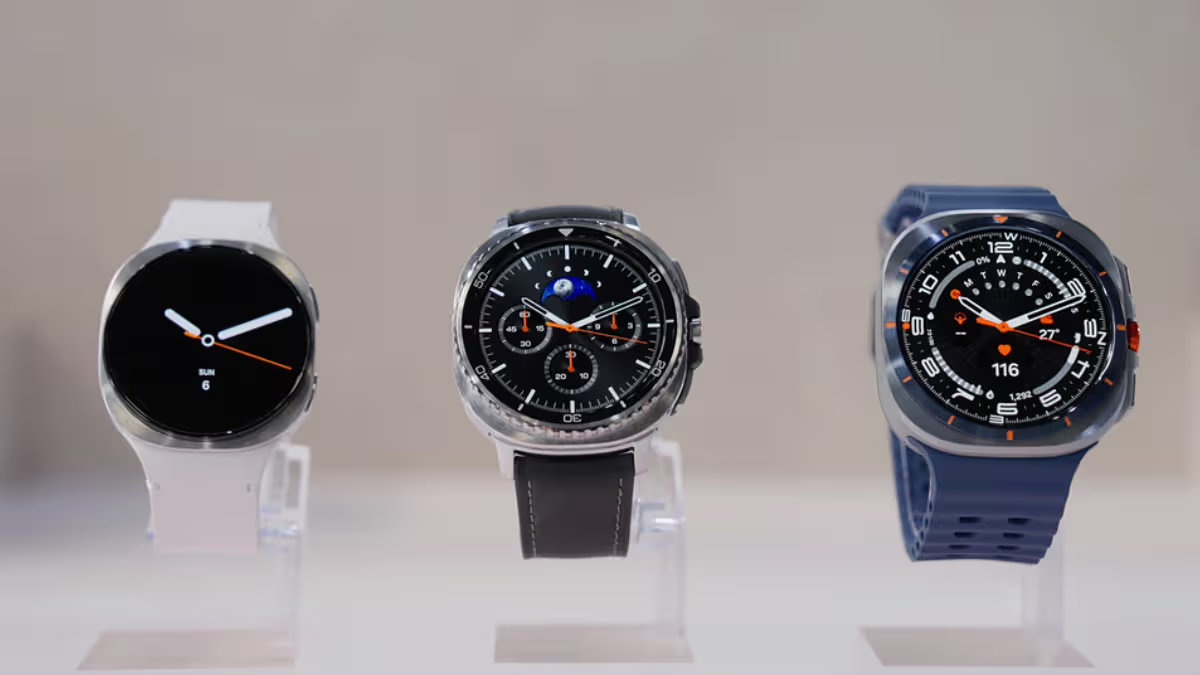
Beyond the extended software commitment, both watches bring meaningful hardware upgrades this generation. The Galaxy Watch Ultra2 features a 1.52-inch Super AMOLED display with 498×498 resolution and a striking 5,000-nit peak brightness, up sharply from 3,000 nits on the previous Ultra model, along with a sapphire crystal cover. It’s powered by the Snapdragon Wear Elite chip, paired with 2GB of RAM and 64GB of storage, housed in a titanium frame that’s IP68 and IP69K rated for dust and water resistance, MIL-STD-810H compliant, and rated for diving up to 40 meters.
The standard Galaxy Watch9, meanwhile, gets a reported 20% battery capacity bump over its predecessor, a meaningful gain for daily usability. Both watches also introduce a range of new AI-powered health-tracking features, and Samsung has suggested the newer 3nm Snapdragon Wear Elite chip likely played a role in enabling the longer software support window, since more efficient, capable silicon generally makes it easier for a device to keep running newer software versions smoothly for longer.
Full Specs Comparison
| Feature | Galaxy Watch9 | Galaxy Watch Ultra2 |
| Starting Price | $379 / €409 | $699 |
| Battery | +20% vs predecessor | 800 mAh |
| Display Brightness | — | 5,000 nits (up from 3,000) |
| Build | — | Titanium frame, sapphire crystal |
| Water/Dust Resistance | — | IP68 & IP69K, dive-rated to 40m |
| Chipset | Snapdragon Wear Elite | Snapdragon Wear Elite |
| Software | Wear OS 7, One UI 9 Watch | Wear OS 7, One UI 9 Watch |
Key Talking Points
1. Samsung Now Sets the Bar for Wear OS Support
By matching its OS upgrade count to its security patch window, Samsung has created the most comprehensive software support policy currently available on any Wear OS smartwatch, comfortably ahead of Google’s own Pixel Watch.
2. Chip Efficiency May Be the Real Enabler
The new 3nm Snapdragon Wear Elite chipset likely made this extended support window technically feasible, suggesting future Samsung watches built on similarly efficient silicon could maintain, or even extend, this same five-year commitment.
3. Buyers of Older Models Face a Genuine Trade-Off
With no confirmation yet on whether older Galaxy Watches will receive the extended policy, shoppers weighing a discounted previous-generation watch against the new models need to factor in this meaningful difference in long-term support.
Five Years Of Updates: Frequently Asked Questions (FAQs)
Which Samsung watches are getting five years of updates?
The Galaxy Watch9 and Galaxy Watch Ultra2, announced at Galaxy Unpacked in London, will receive five major OS upgrades and five years of security patches through 2031.
How does this compare to Google’s Pixel Watch?
Samsung’s five-year commitment is nearly double Google’s current three-year update policy for the Pixel Watch, even though both run on the same Wear OS 7 platform.
When do the Galaxy Watch9 and Watch Ultra2 launch?
Both watches are available for pre-order now, with a global launch date of August 7, 2026.
Will older Galaxy Watch models get five years of updates too?
Not confirmed. As of this report, Samsung hasn’t said whether the Galaxy Watch 8, Watch 8 Classic, or original Watch Ultra will receive the extended five-OS-upgrade policy.
How much do the new Galaxy Watches cost?
The Galaxy Watch9 starts at $379 (€409), while the Galaxy Watch Ultra2 starts at $699.
Conclusion — A New Standard for Smartwatch Longevity
By offering the Galaxy Watch9 and Galaxy Watch Ultra2 five years of updates, Samsung has set a new benchmark for how long a Wear OS smartwatch should realistically remain supported. It’s a meaningful upgrade over the company’s own previous policy and a clear differentiator against Google’s Pixel Watch, all while bringing genuine hardware improvements alongside the extended software promise. Whether this becomes the new baseline across the Wear OS ecosystem, or whether older Galaxy Watch owners eventually see similar treatment, remains to be seen, but for now, Samsung’s newest smartwatches offer the strongest long-term software commitment in the category.
Stay tuned to Mirrorly.in for more Samsung and wearable technology coverage.
📖 Also Read: Meta AI App Personalised Children Stories: Inside StoryKit, Meta’s New Storytelling Pilot